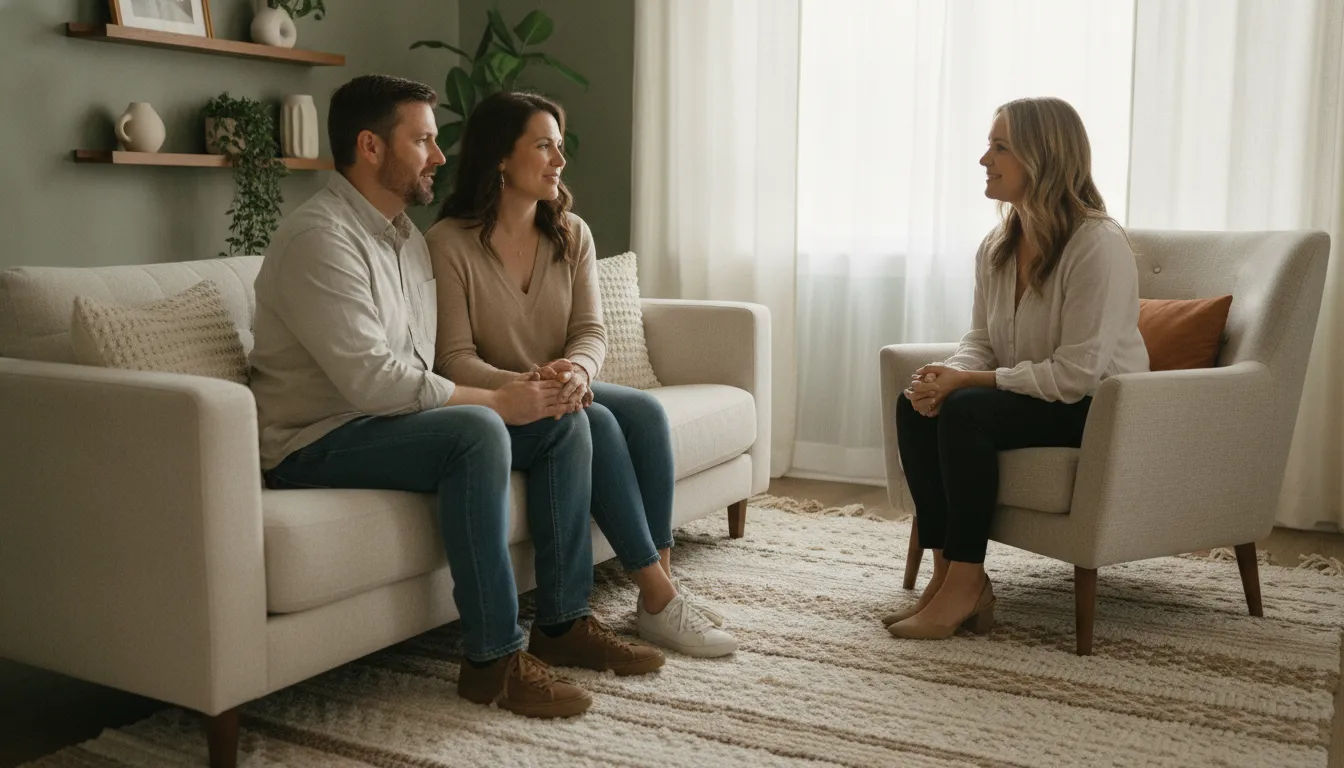
Renewal of the Mind is a Fairfax, VA psychotherapy practice serving individuals, couples, families, children, teens, and adults across Northern Virginia. Our team provides supportive, culturally aware, and personalized care designed around each client’s unique needs.

Relationship anxiety can make ordinary uncertainty feel urgent. You may replay a conversation, question your feelings, worry that your partner will leave, or seek reassurance repeatedly. These experiences do not automatically mean that your relationship is unhealthy or that you have a mental health diagnosis. They may reflect stress, past experiences, attachment concerns, or an anxiety pattern that deserves thoughtful attention.
Call (571) 264-8192 to discuss relationship anxiety therapy options.
Relationship anxiety is persistent worry, fear, or intrusive doubt focused on a relationship. Speaking with therapists for relationship anxiety may help you understand triggers, notice reassurance or avoidance patterns, and develop coping and communication skills. If worry is persistent, causes significant distress, or interferes with work, sleep, or daily life, a licensed professional can help assess what support may be appropriate.
The distinction between an internal alarm and evidence of a relationship problem is not always simple, and both can exist at the same time. Understanding what relationship anxiety can look like is a useful first step toward responding with greater clarity and care.
Relationship anxiety is a pattern of worry, fear, or uncertainty connected to an intimate relationship. You may question whether your partner cares, whether the relationship is right, or whether something will go wrong, even when you cannot identify a clear present-day threat. Some uncertainty is a normal part of being close to another person. The concern is not the existence of a difficult thought, but whether worry becomes persistent, hard to work through, or disruptive to daily life.
An internal alarm can make ordinary moments feel loaded with meaning. A delayed text may seem like evidence of rejection. A small disagreement may trigger fears of abandonment or a need to review the conversation repeatedly. Some people seek reassurance from a partner, friends, or online sources, then feel uncertain again soon afterward. These experiences can create strain without meaning that anyone is doing something wrong.
There is no single cause. Past experiences, including betrayal, loss, inconsistent caregiving, difficult relationships, or trauma, may shape how a person responds to closeness and uncertainty. Attachment patterns can also influence expectations about whether others will be dependable or whether connection is safe. These patterns are not fixed labels or diagnoses. They are ways of understanding learned responses that may change with support and reflection.
Stress, life transitions, and earlier anxiety can also make relationship fears feel more intense. Relationship-focused intrusive thoughts may lead some people to magnify and replay doubts or criticisms about a partner. A qualified clinician can help distinguish common relationship concerns from symptoms that may reflect anxiety, obsessive-compulsive symptoms, trauma responses, or another concern. An article cannot make that assessment.
If you are looking for therapists for relationship anxiety, individual therapy may offer a private place to explore triggers, emotional responses, and communication needs. A partner does not necessarily need to attend for you to begin examining your own patterns. Consider professional consultation when worry is persistent, causes significant distress, or interferes with sleep, work, daily functioning, or the relationship. If you feel unsafe or are experiencing an urgent mental health crisis, seek immediate help through local emergency services or a crisis resource.
Relationship anxiety can show up in thoughts, actions, emotions, and physical sensations. Some worry about a relationship is common. The concern becomes more important to address when it feels difficult to interrupt, keeps returning across situations, or begins to affect daily functioning. These signs do not diagnose an anxiety disorder, OCD, or any other condition. Only a qualified mental health professional can assess what you are experiencing in context.
You may feel persistent uncertainty about your partner's feelings, commitment, or the future of the relationship. A small change in tone, a delayed text, or an ordinary disagreement may trigger intense fear or self-doubt. You might repeatedly replay conversations, analyze your partner's words, compare your relationship with others, or search for proof that everything is okay. The mind can become focused on questions that do not have a perfectly certain answer. Such as whether you are with the right person or whether your feelings are strong enough.
Worry often leads to attempts to obtain immediate relief. For example, you may ask your partner to confirm their love or commitment many times. Check messages for hidden meaning, test their feelings, avoid vulnerable conversations, or repeatedly review memories for evidence. Reassurance can feel calming for a short time, but the doubt may return and restart the cycle. Relationship-focused intrusive thoughts can sometimes be accompanied by repetitive reassurance-seeking behaviors, as described by the Cleveland Clinic. This pattern is not, by itself, proof of relationship OCD.
Anxiety can also activate the body's stress response. You may notice restlessness, muscle tension, nausea, stomach discomfort, difficulty falling or staying asleep, or persistent fatigue. Physical symptoms can occur alongside worry, but they can also have other medical causes. The Mayo Clinic's overview of anxiety symptoms includes restlessness, muscle tension, nausea, and trouble sleeping.
Consider seeking professional guidance if these experiences cause significant distress, interfere with work or relationships, or make it hard to participate in everyday life. A therapist can help you explore the pattern without labeling you from a checklist. If physical symptoms are new, severe, or concerning, consult a medical professional as well.
Feeling uncertain does not automatically mean that a relationship is unhealthy. Most people have questions or fears at times. The more useful question is what is feeding the concern and how it affects your life. Relationship anxiety may act like an internal alarm, magnifying a small uncertainty, replaying an uncomfortable interaction, or urging you to seek reassurance repeatedly. Current relationship problems, by contrast, are usually connected to observable patterns between partners. Sometimes both are present: a person may have an anxiety pattern, while the relationship also needs attention.
These distinctions are not a self-diagnosis. Relationship-focused obsessive-compulsive symptoms, generalized anxiety, and panic symptoms can overlap while remaining clinically distinct, and only a qualified professional can assess what may be happening. The following comparison can help you organize your observations before seeking support.
| Area | Anxiety may be contributing | A relationship concern may need attention |
|---|---|---|
| Source of concern | The fear may arise from uncertainty, past experiences, or an intrusive doubt that feels urgent even without new evidence. | The concern is connected to current, specific behavior such as repeated broken agreements, disrespect, or unresolved conflict. |
| Pattern | You may replay conversations, examine your feelings, compare the relationship, or ask for reassurance again and again. Relationship-focused anxiety can magnify and replay doubts, as described by Cleveland Clinic. | There may be a recurring interaction pattern that both people can observe, discuss, and potentially change, such as withdrawal, criticism, or difficulty repairing after conflict. |
| Impact | Worry may continue across situations, interfere with sleep or daily functioning, and remain difficult to settle even after reassurance. | The relationship may be causing ongoing distress through actions or dynamics that affect trust, emotional security, communication, or personal boundaries. |
| Useful next step | Track triggers and reassurance loops, practice grounding, and consider individual support from a licensed clinician who can assess the pattern. | Discuss the specific behavior when it is safe to do so, set clear boundaries, and consider relationship support focused on communication, trust, or conflict repair. |
You do not have to decide whether your concern is "only anxiety" before asking for help. A therapist can help you separate fear from current evidence while taking both seriously. If you are considering signs of relationship anxiety or relationship strain, professional consultation may clarify whether individual or couples support fits your needs.
Call (571) 264-8192 if you would like to explore individual or couples counseling.
If there is coercion, intimidation, threats, physical violence, sexual pressure, or another form of abuse, prioritize safety-focused support rather than treating the situation as an anxiety-management problem. Consider contacting a local domestic violence resource or emergency services when immediate danger exists. General information cannot replace assessment, crisis care, or individualized safety planning.
Therapy can offer a structured, nonjudgmental place to slow down relationship-related worry and understand what may be sustaining it. A therapist does not decide whether your relationship should continue. Instead, the work is intended to support clearer self-understanding, informed choices, and healthier ways of responding to uncertainty.
Early sessions may focus on what you are experiencing, when the anxiety appears, and how it affects sleep, concentration, daily functioning, or communication. A therapist may ask about recurring doubts, reassurance-seeking, conflict, past relationships, attachment experiences, trauma, and current stressors. This process can help distinguish a passing concern from a pattern that is persistent or significantly distressing. It is also important not to self-diagnose relationship obsessive-compulsive disorder, or ROCD, based on an article. A qualified clinician can assess symptoms and consider whether anxiety, OCD-related symptoms, trauma, depression, or another concern may be relevant.
Identifying triggers can make the experience feel less mysterious. For example, anxiety may intensify after conflict, during periods of distance, when making a commitment, or when you notice an ordinary difference between you and your partner. The goal is not to prove that every worry is irrational. It is to examine the situation carefully and understand the response it brings up.
Cognitive Behavioral Therapy (CBT) approaches help people examine and challenge unhelpful thought patterns. CBT-based treatments for anxiety and stress-related disorders have been extensively studied in clinical research. With guidance, you might learn to notice all-or-nothing conclusions, repeated mental checking, or predictions treated as facts. You can then practice considering more balanced possibilities without demanding absolute certainty.
Therapy may also include coping skills for managing emotional and physical activation. Depending on your needs, these could include grounding, paced breathing, noticing body sensations, setting limits on reassurance-seeking, journaling, or making space between a thought and an immediate reaction. These tools are not meant to suppress important information. They may help you become calmer and more present before deciding how to respond.
A therapist can help you identify communication needs, express concerns without blame, and listen for the difference between reassurance and meaningful connection. If both partners want support with trust, conflict, or shared patterns, couples therapy to help manage relationship anxiety may be worth considering. You can also review signs of relationship anxiety that may indicate a need for additional support.
Individual therapy can address personal anxiety patterns even if a partner does not attend. Couples therapy is not required for every relationship concern, and individual therapy does not mean you have already decided to leave. A clinician can help you consider the context, your values, your safety, and your goals. If there is coercion, intimidation, or risk of harm, safety planning and specialized professional support should take priority over standard couples work. Renewal of the Mind offers individual therapy services in Fairfax and through HIPAA-compliant telehealth in Northern Virginia. Information here is educational and is not a diagnosis or a substitute for professional care.
You do not have to wait until relationship anxiety feels overwhelming before seeking help. Professional support may be worth considering when worry persists, becomes more intense, or begins to shape your choices and interactions. The Mayo Clinic notes that anxiety and physical symptoms can warrant guidance when they cause significant distress or interfere with social, work, or other areas of daily life.
That interference may look different from person to person. You might spend long periods replaying conversations, checking your partner's feelings, or seeking reassurance without feeling settled for long. You may avoid honest conversations because you fear conflict, or find it difficult to communicate what you need. Persistent worry can also accompany trouble sleeping, muscle tension, nausea, or other physical symptoms. These experiences do not automatically indicate a diagnosis, but they can be useful signals that additional support could help.
A history of trauma, betrayal, loss, unpredictable caregiving, or painful relationships can affect how safety and uncertainty feel in a current relationship. That history does not mean your concerns are imaginary, and it does not determine the future of your relationship. A trauma-informed therapist can help you explore the connection between earlier experiences, present triggers, emotional responses, and communication patterns at a pace that respects your boundaries.
It may also help to seek consultation if anxiety is affecting your ability to work, connect with friends or family, enjoy daily activities, or make decisions. If there is abuse, coercion, threats, or immediate danger, prioritize safety planning and urgent support rather than treating the situation as ordinary relationship anxiety.
When looking for therapists for relationship anxiety, consider whether the clinician is licensed. Experienced with anxiety and relationship concerns, and comfortable discussing your cultural background, identity, and relationship structure. Ask how they typically approach persistent worry, reassurance cycles, trauma-related reactions, and communication difficulties. Individual therapy can focus on your own anxiety patterns, even if your partner does not attend. Couples therapy may be appropriate when both partners want to work on shared communication, trust, or conflict patterns.
A first conversation is also a chance to notice whether you feel respected, heard, and able to ask questions. Treatment should be collaborative. A therapist can help you understand your experiences and consider coping or communication options, without pressuring you to stay in or leave a relationship. Renewal of the Mind provides in-person and HIPAA-compliant telehealth counseling in Fairfax and throughout Northern Virginia. Learn more about individual therapy services.
Beginning counseling does not require you to arrive with a clear explanation or a decision about your relationship. Early sessions are usually a chance to slow down, describe what has been happening, and identify what you hope will feel different. A therapist may ask about your relationship history, significant life experiences, current stressors, and the situations that tend to trigger fear, doubt, or a need for reassurance.
You can also expect questions about how anxiety affects sleep, concentration, communication, and daily functioning. Sharing this context helps the therapist understand your concerns without reducing you or your relationship to a label. Only a qualified clinician can determine whether a mental health condition is present, and an educational article cannot provide a diagnosis.
Counseling is a collaborative process. You and your therapist may identify patterns in your thoughts, emotions, and behaviors, then discuss practical ways to respond when relationship uncertainty feels overwhelming. Depending on your needs, this might include noticing triggers, building tolerance for uncertainty, practicing communication skills, or finding healthier ways to seek support. A therapist can help you examine your concerns while respecting your values and lived experience.
The purpose is not to steer you toward staying together or ending the relationship. Therapy can give you space to understand your feelings and make decisions with greater clarity. Your therapist should support informed, self-directed choices rather than make that decision for you. If there is abuse, coercion, or an immediate safety concern, individual support and a safety-focused plan may be more appropriate than joint counseling.
Individual therapy can address personal anxiety patterns even when a partner does not attend. Couples counseling may be appropriate when both partners want help with communication, trust, conflict, or shared relationship patterns. The best format depends on your goals, safety, and circumstances. You can learn more about individual therapy services before deciding what type of support to explore.
Renewal of the Mind provides in-person counseling in Fairfax and Northern Virginia, as well as HIPAA-compliant telehealth. Your clinician can discuss privacy, scheduling, and what to expect from the selected format. Treatment should be adapted to your needs, culture, relationship structure, and comfort level. If anxiety is persistent or interferes with daily life, consider speaking with a licensed mental health professional for individualized guidance.
Call (571) 264-8192 to take a thoughtful next step with a therapist.
Consider seeking professional guidance when worry feels persistent, difficult to control, or begins to interfere with sleep, work, social activities, or other parts of daily life. Physical symptoms such as muscle tension, nausea, or trouble sleeping can also signal that anxiety deserves attention. These signs do not establish a diagnosis, but they are reasonable reasons to consult a licensed therapist. Learn more about anxiety symptoms.
Not necessarily. Relationship OCD is a clinical term for OCD symptoms involving intrusive relationship-focused thoughts and repetitive behaviors intended to reduce distress. Anxiety, uncertainty, communication concerns, and relationship conflict can have different causes and may overlap. Only a qualified clinician can assess what you are experiencing, so an article should not be used to label yourself. Cleveland Clinic explains relationship OCD.
Yes. Individual therapy can help you explore personal anxiety patterns, past experiences, triggers, boundaries, and communication choices even when your partner does not attend. A therapist can support your goals without deciding whether you should remain in the relationship. Couples therapy may be another option when both partners want help with shared communication or conflict patterns.
Look for a licensed professional who listens without judgment, explains the approach clearly, respects your relationship structure and cultural background, and has experience with anxiety and relationship concerns. You can ask how the therapist handles uncertainty, reassurance-seeking, trauma history, and safety concerns. A collaborative first conversation can help you decide whether the fit feels comfortable.
Counseling is not meant to make that decision for you. It may help you separate current relationship evidence from fear-based assumptions, understand recurring patterns, clarify needs, and consider options with greater self-awareness. If there is abuse, coercion, or an immediate safety concern, prioritize safety planning and appropriate urgent support rather than relying on a blog article.
If relationship anxiety feels persistent, distressing, or difficult to manage, talking with a qualified therapist may help you understand your patterns and consider supportive next steps. Renewal of the Mind offers therapy options for individuals and couples in Fairfax and Northern Virginia, with in-person and HIPAA-compliant telehealth care.
Call (571) 264-8192 to discuss therapy options for relationship anxiety.
This article is for general information and is not a diagnosis or a substitute for professional or emergency care. A qualified clinician can help assess your concerns and recommend appropriate support.
Our compassionate team at Renewal of the Mind is here to help — whether you’re navigating anxiety, trauma, relationship challenges, or simply need someone to talk to. We offer in-person and telehealth sessions across Northern Virginia.