Renewal of the Mind is a Fairfax, VA psychotherapy practice serving individuals, couples, families, children, teens, and adults across Northern Virginia. Our team provides supportive, culturally aware, and personalized care designed around each client’s unique needs.

Silences that stretch for hours are often a sign of deep hurt in a marriage. When partners stop sharing their true thoughts, the emotional distance grows until the relationship feels like a burden. Professional support offers a neutral path to help couples bridge this divide.
The effort to rebuild trust and communication in couples therapy involves following a clear path toward emotional safety. This work requires partners to recognize how negative interaction cycles keep them stuck. These cycles often begin after betrayals such as infidelity or broken promises create a power struggle. A licensed therapist helps couples identify destructive patterns like criticism and defensiveness and replace them with structured tools such as active listening and emotional bidding. Sessions provide a space where each person can express their needs without fear of blame. While repairing a bond takes time, expert guidance supports couples in learning new ways to connect. Renewal of the Mind offers these services in Fairfax, VA and online to help partners build the skills they need.
Many partners struggle to understand why their relationship feels stuck in a cycle of hurt and blame. They often feel lost when trying to discuss the future without escalating into conflict. The first step toward repair is learning to recognize the specific patterns that erode trust , patterns that researchers have studied and named. This process starts by understanding what happens emotionally when communication breaks down and why a neutral guide makes the difference.
Trust is the foundation of a strong relationship. It goes beyond knowing where your partner is at night. Trust is the belief that your partner genuinely cares for your wellbeing, that they are honest with you, and that you can rely on them during difficult times. When this sense of safety erodes, the entire relationship begins to destabilize.
Trust can fracture in many ways. While infidelity is a well-known cause, financial deception, hidden secrets, and repeatedly broken promises also damage the bond. When trust is lost, partners often describe feeling as though they are walking on eggshells in their own home. They may hide their true feelings or withdraw from shared activities to avoid triggering another conflict.
Many couples reach a point where they realize they cannot repair the damage alone. They seek individual and relationship therapy to understand how trust eroded and what specific steps can restore it. Nationally, approximately 40 to 50 percent of marriages end in divorce, according to CDC data. While these statistics are sobering, they also highlight why addressing trust issues early , before patterns become entrenched , is so critical.
The warning signs of deteriorating communication are not always obvious. Partners may stop sharing small daily victories, hide their phone, or avoid certain topics to prevent an argument. Withholding information or feeling unable to be authentic around one another are significant red flags. The emotional gap widens until the couple no longer functions as a team. Instead of collaborating, they build defensive walls that protect each individual but isolate the relationship.
Research consistently shows that communication breakdown is the most common reason couples seek therapy. Gottman's decades of observational research identified four specific communication patterns , known as the Four Horsemen of the Apocalypse , that predict relationship dissolution with remarkable accuracy: criticism, contempt, defensiveness, and stonewalling. Recognizing these patterns is the first step toward replacing them with healthier alternatives.
Emotionally Focused Therapy (EFT), developed by Dr. Sue Johnson, frames relationship distress in terms of negative interaction cycles. Typically one partner pursues , demanding connection, answers, or reassurance , while the other withdraws, becoming silent or physically distant. This pursuer-distancer dance becomes self-reinforcing: the more one partner pursues, the more the other withdraws, and the cycle deepens.
To rebuild trust and communication in couples therapy, partners must first learn to identify their specific cycle. A trained EFT therapist helps each person articulate the emotions driving their side of the pattern. Often fear of abandonment on the pursuer's side and fear of engulfment on the withdrawer's side. Once the cycle is named, the couple can learn to step out of it together rather than blaming each other for the conflict.
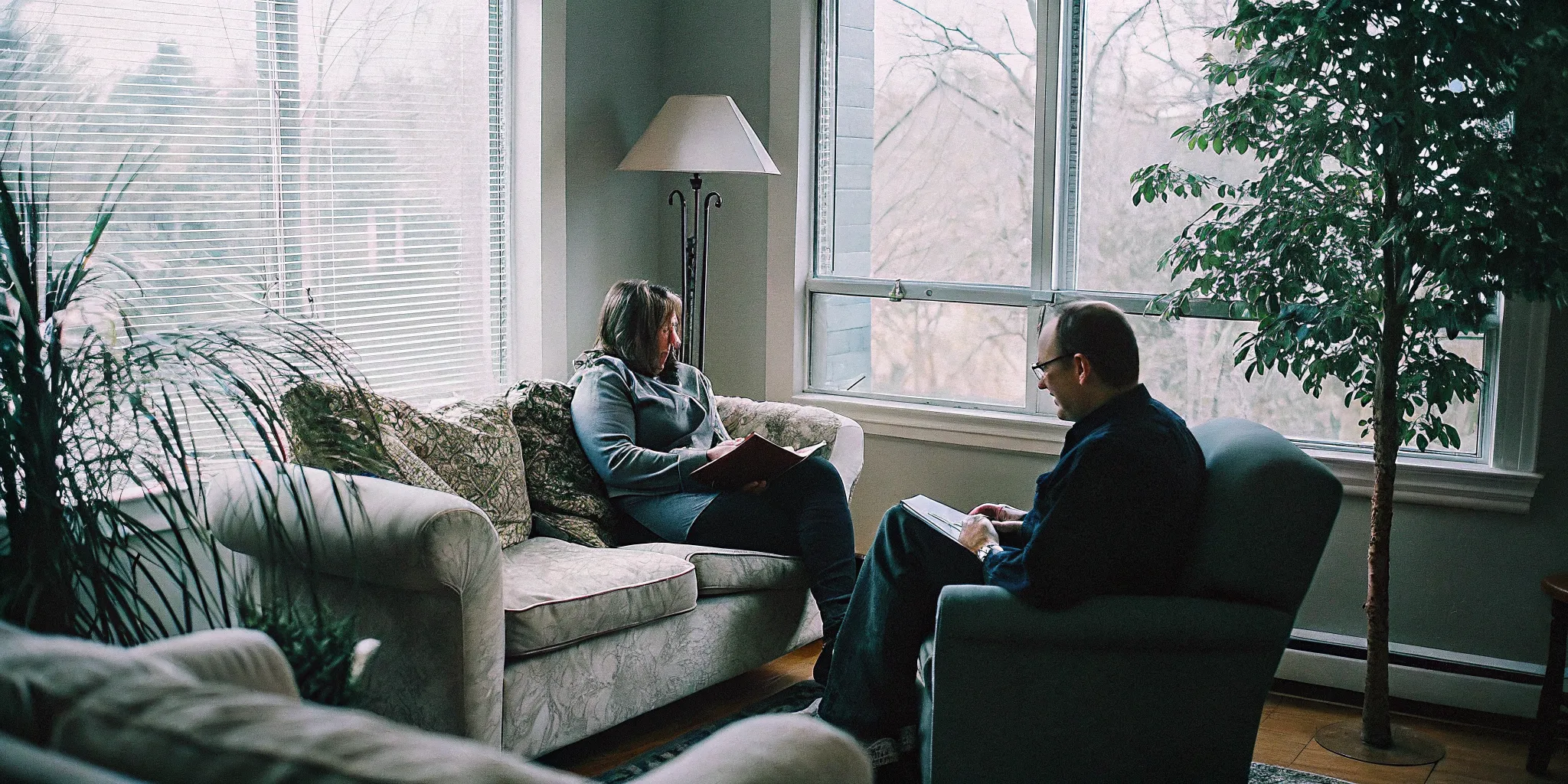
Trust is the bedrock of intimate relationships. When it fractures, the pain can feel overwhelming. Many couples try to resolve these issues independently but find themselves replaying the same arguments without resolution. Couples therapy offers a structured, neutral environment to explore the underlying dynamics. In typical 50-60 minute sessions, partners learn to talk about what went wrong without escalating into blame.
Our therapists at Renewal of the Mind work with all relationship structures. We help couples uncover the root causes of their trust and communication difficulties. This professional support provides the framework needed to rebuild trust and communication in couples therapy by establishing emotional safety. Our team delivers affirming care for couples of all orientations and configurations.
A trained couples therapist serves as a neutral guide. They help partners identify the negative patterns that keep them stuck. In EFT, the therapist uses a three-stage model: de-escalation of the negative cycle, restructuring the bond by accessing underlying emotions, and consolidation through new positive cycles. In the first stage, the therapist may use enactments , structured conversations in which partners speak directly to each other while the therapist facilitates , to reveal the cycle in real time.
The Gottman Method offers complementary tools. Therapists trained in this approach assess a couple's strengths and areas for growth through structured interviews and the Sound Relationship House theory. Partners learn to build the emotional bank account through small, daily deposits of attention and affection. They also learn to soften startup , beginning difficult conversations gently rather than with criticism, which Gottman's research identifies as a strong predictor of divorce.
While every relationship is unique, trust repair often follows a structured progression. The Gottman Trust Revival Method outlines a clear pathway:
The Gottman Method emphasizes seven principles for maintaining trust. Knowing your partner's inner world , their worries, hopes, and daily stresses , is the foundation. Expressing appreciation aloud, rather than assuming they know, reinforces emotional connection. Turning toward bids for connection, whether a smile, a question, or a touch, builds the emotional bank account. Partners who respond to at least five of every six bids maintain stable relationships, according to Gottman's laboratory studies. Allowing influence from each other, managing conflict through gentle startup, and creating shared meaning through rituals all contribute to a resilient bond. The Gottman Institute provides a detailed breakdown of these principles and their scientific basis.
| Factor | With Couples Therapy | Trying Alone |
|---|---|---|
| Neutral Guide | Trained professional facilitates both perspectives. | Each partner naturally advocates for their own view. |
| Evidence-Based Tools | Sessions use EFT, Gottman Method, and other proven frameworks. | Self-help books and intuition may not address core dynamics. |
| Accountability | Weekly sessions maintain momentum and follow-through. | Easier to avoid difficult conversations indefinitely. |
| Emotional Safety | Therapist ensures structured, safe dialogue. | Conversations can escalate into old patterns quickly. |
| Pattern Recognition | Clinician identifies cycles partners cannot see. | Couples often stay stuck in the same loop for years. |
Entering couples therapy is a significant step for any relationship. Knowing what happens during a typical session reduces anxiety and helps partners prepare. At Renewal of the Mind, sessions run approximately 50 to 60 minutes in a private, confidential space where both partners can speak candidly.
Therapy typically begins with a joint session to review the couple's history. The therapist gathers information about the presenting problem, relationship milestones, and each partner's goals. This initial assessment shapes the treatment plan. From there, therapy progresses through identifiable stages:
Renewal of the Mind provides care that works with your schedule. You can visit our office for in-person couples therapy in Fairfax, VA or connect from home through HIPAA-compliant telehealth. Our therapists serve couples throughout Fairfax County, Arlington, Reston, and the broader Northern Virginia area. We welcome all relationship structures and provide affirming care across orientations and identities.
To rebuild trust and communication in couples therapy, partners must learn specific skills. Many couples fall into the Four Horsemen patterns without realizing it. Learning to recognize criticism (attacking a partner's character), contempt (attacking their worth), defensiveness (playing the innocent victim), and stonewalling (emotional withdrawal) is essential. In therapy, partners practice replacing each of these with their antidotes: gentle startup, appreciation, taking responsibility, and self-soothing.
Active listening is a foundational skill that helps partners hear each other without judgment. Instead of planning a rebuttal, each person focuses on understanding their partner's emotional experience. The speaker-listener technique formalizes this: one partner speaks while the other reflects back what they heard, without adding their own interpretation. The therapist facilitates until both partners can use the skill independently. Our team of licensed therapists in Fairfax, VA guides couples through this practice in a supportive setting.
"I" statements are another essential tool. Rather than saying "You never listen to me," partners learn to express their feelings directly. A partner might say, "I feel unheard when I share something important and do not receive a response." This small shift reduces defensiveness and keeps the conversation focused on each person's experience instead of blame. In EFT, this process is called softening. The withdrawer begins to share their underlying fears, and the pursuer learns to respond with warmth rather than criticism.
Gottman's research identifies emotional bids as the fundamental units of emotional connection. A bid can be a question, a touch, a sigh, or a comment. Each bid is an invitation for connection. Partners who regularly turn toward bids , responding with engagement rather than ignoring or dismissing them , build trust incrementally. In longitudinally studied couples, those who divorced averaged 33 percent bid responses, while stable couples responded 86 percent of the time. This difference alone powerfully predicts relationship outcomes. The Gottman Institute provides additional research on the bid model.
Dr. Brené Brown's research demonstrates that trust and vulnerability are inseparable. Sharing difficult emotions , fear, shame, sadness , is a risk, but it is the only path to deep connection. When trust is broken, a genuine apology requires more than saying "I'm sorry." It requires naming the specific action. Acknowledging the impact on the partner, and making concrete changes. Gottman's A.R.E. framework (Accessible, Responsive, Engaged) provides a clear benchmark: partners should feel they can reach each other. That they receive attuned responses, and that their partner is emotionally present. Repair attempts , even imperfect ones , are one of the strongest predictors of long-term relationship stability.

Trust requires reliability, integrity, and emotional safety between partners. Research shows that individual and relationship therapy is frequently sought specifically because of communication breakdown. However, several obstacles commonly slow the repair process. Identifying these barriers is the first step toward moving past them.
Defensiveness is one of the Four Horsemen and a major barrier to repair. When a partner feels attacked, they may deflect blame, make excuses, or counter-criticize. Rather than hearing their partner's pain, they focus on defending themselves. Defensiveness blocks progress because it prevents either person from taking responsibility for their role in the conflict.
Stonewalling occurs when a partner emotionally shuts down during a difficult conversation. They may fall silent, leave the room, or disengage entirely. While stonewalling can be a coping mechanism to manage overwhelming emotion, it leaves the other partner feeling abandoned. In therapy. Partners learn to recognize when they are flooded , physiologically overwhelmed , and request a time-out of at least 20 minutes to self-soothe before returning to the conversation. As Gottman's research recommends for preventing escalation.
Rebuilding trust requires emotional honesty about feelings and needs. After a betrayal, this openness can feel terrifying. Many partners protect themselves by withholding, which paradoxically prevents the very connection they want. Without vulnerability, the relationship remains stuck in what EFT calls a negative cycle , each partner waiting for the other to make the first move toward safety.
Consistency is equally vital. Trust accumulates through small, repeated acts of reliability over time. If one partner is warm one day and cold the next, the other cannot feel secure. Partners must demonstrate trustworthiness through daily follow-through , showing up on time, keeping promises, and being honest about small things as well as large ones.
Previous relational trauma can complicate trust repair. A person who experienced betrayal in past relationships may react intensely to relatively minor disappointments in the present. This hypervigilance is a natural protective response, but it can prevent the current partner from being seen for who they are. Therapists at Renewal of the Mind integrate trauma-informed therapy approaches such as EMDR to help individuals separate past pain from present interactions.
Unrealistic expectations about the timeline of repair also create barriers. Many couples expect healing to occur in a matter of weeks, but trust restoration typically unfolds over months of consistent effort. There will be setbacks and difficult days. A therapist helps couples set a sustainable pace, normalizing the imperfection of the process while maintaining accountability for the work.
Knowing when to reach out for help can be difficult. Many couples delay far longer than necessary, allowing patterns to deepen. The ideal time to seek couples therapy is when partners first notice they are stuck , unable to resolve a recurring conflict. Feeling emotionally distant, or avoiding certain topics altogether.
One clear indicator is repeating the same argument without resolution. If a couple has the same fight about money, trust, or household responsibilities with no movement, a therapist can help identify the underlying dynamic. Emotional distance is another major signal. Partners may feel like roommates rather than romantic partners, with limited physical affection, minimal conversation, and separate daily routines.
Withholding , hiding information, avoiding questions, or deflecting when a partner asks for transparency , is a serious sign that trust needs professional attention. Some partners display "checked-out" behavior, where one person has stopped investing in the relationship or is actively considering leaving. Researchers at Utah State University note that seeking help early can prevent relational patterns from becoming entrenched. Waiting until the bond is nearly gone makes the therapeutic work longer and harder.
A trained couples therapist provides a structured environment where both partners feel safe to speak openly. They do not take sides. Instead, they guide the conversation toward the underlying emotions and attachment needs that drive surface-level conflict. Many trust issues have roots that the partners themselves cannot see , old attachment injuries, family-of-origin patterns, or mismatched relational expectations. A skilled therapist surfaces these dynamics and helps the couple address them directly.
Therapy also provides a contained space for the difficult conversations that couples tend to avoid. Partners can express fears about the future of the relationship, admit the ways they have contributed to the problem. And ask for what they need , all within a framework that prevents escalation. The therapist teaches real-time skills that partners practice in session and then apply at home between appointments.
At Renewal of the Mind, we believe every relationship is worth investing in. We provide couples therapy in Fairfax, VA for all relationship types and configurations. Our goal is to help you build a partnership that feels connected, safe, and resilient.
We maintain a team of over 19 licensed professionals in Fairfax, VA, making it possible to match each couple with a therapist whose approach and style align with their needs. We offer multilingual services including Arabic, Spanish, Korean, German, and Malayalam. You can meet with us in our Fairfax office or through a secure telehealth platform from home. We are here to support couples throughout Northern Virginia as they work toward a stronger relationship.
Rebuilding trust is not a single event , it is a gradual process of consistent, intentional effort. It requires both partners to show up with honesty and care over an extended period. This work begins by creating a safe context in which each person feels comfortable speaking openly. At Renewal of the Mind, couples learn to move past old injuries and rediscover the emotional and physical closeness that initially brought them together.
One of the most effective ways to repair a relationship is to build new shared experiences. These do not need to be elaborate or expensive. The key is that they focus on mutual enjoyment rather than problem-solving. Research published in the Journal of Marital and Family Therapy emphasizes that effective couples therapy combines processing past hurts with actively building positive shared experiences. A 10-minute daily stress-reducing conversation, a weekly walk in one of Fairfax's parks, or cooking a meal together can rebuild the sense of partnership. These small moments provide opportunities to see each other with fresh appreciation.
The goal is to accumulate a bank of positive emotional memories. These memories serve as a buffer during difficult times. When couples have a reserve of goodwill to draw on, they navigate conflict more constructively. Each positive interaction is a small investment in the future of the relationship.
Trust restoration typically occurs over several months of consistent effort. The timeline depends on the depth of the betrayal, both partners' willingness to engage in the process, and the quality of therapeutic support. Most couples see meaningful progress within three to six months of weekly sessions, though full repair can take longer.
Yes. Infidelity is one of the most common reasons couples seek therapy. And evidence-based approaches like the Gottman Method and EFT have strong success rates in helping partners process betrayal and rebuild trust. The therapist helps both partners understand the context of the affair, process the emotional impact, and develop a plan for rebuilding safety and transparency.
Therapy is most effective when both partners are actively engaged. However, even one committed partner can create change by shifting their own behavior patterns. A skilled therapist can work with the ambivalent partner to build motivation and engagement over time. If one partner refuses to attend, individual therapy can still be beneficial for understanding personal patterns and learning healthier ways to navigate the relationship.
Both are evidence-based approaches with strong research support. The Gottman Method is skills-focused, teaching couples specific tools for managing conflict, building friendship, and creating shared meaning. EFT focuses on attachment theory and helps partners identify and restructure negative emotional cycles. Many therapists integrate both approaches to match the couple's specific needs.
Yes. Renewal of the Mind offers secure, HIPAA-compliant telehealth couples therapy for clients throughout Virginia. Online sessions are effective for couples who cannot attend in-person appointments due to schedule conflicts, travel, or personal preference. Our Fairfax office is also open for couples who prefer face-to-face sessions.
You do not have to navigate this alone. Our experienced couples therapists at Renewal of the Mind in Fairfax, VA are here to help you and your partner build a stronger, more connected relationship. Using evidence-based approaches including the Gottman Method and Emotionally Focused Therapy, we provide a structured path to restore trust and improve communication.
Contact our Fairfax, VA office today to schedule your initial couples therapy consultation.
Our compassionate team at Renewal of the Mind is here to help — whether you’re navigating anxiety, trauma, relationship challenges, or simply need someone to talk to. We offer in-person and telehealth sessions across Northern Virginia.