
Renewal of the Mind is a Fairfax, VA psychotherapy practice serving individuals, couples, families, children, teens, and adults across Northern Virginia. Our team provides supportive, culturally aware, and personalized care designed around each client’s unique needs.

Children do not always have the words to explain worry, grief, conflict, or overwhelming experiences. Their play, however, can offer important clues about how they are feeling and making sense of the world.
Call (571) 264-8192 to discuss support for your child
What is play therapy? It is a structured, theoretically based form of counseling that uses play as a developmentally appropriate way for children to communicate. Children can explore emotions, practice skills, and build a therapeutic relationship. At Renewal of the Mind, a qualified clinician adapts the approach to the child's age, needs, culture, and goals rather than assuming play therapy is right for every child.
For parents in Fairfax, Arlington, and throughout Northern Virginia, understanding this process can make seeking support feel more manageable. Renewal of the Mind offers a collaborative place to begin that conversation. The setting, materials, and therapist's responses all serve a purpose. Together, they create space for a child to participate in ways that feel natural and safe.
At Renewal of the Mind, play therapy is a structured child counseling approach that uses developmentally appropriate play to support communication. Emotional expression, skill practice, and the therapeutic relationship. A qualified clinician considers the child's age, needs, culture, and goals when deciding whether this approach fits.
Play therapy is a structured form of child counseling that uses play as a developmentally appropriate way for children to communicate, explore feelings, and practice new responses. It is not simply unstructured time with toys. A trained therapist selects or offers activities based on the child's developmental level, concerns, strengths, and goals. The therapist also creates a consistent setting where the child can feel safe enough to participate.
Children may not yet have the vocabulary, emotional distance, or confidence to explain a difficult experience directly. Through drawing, storytelling, puppets, blocks, dolls, sand play, movement, or imaginative games, they may communicate experiences that are difficult to describe in conversation. A review in the medical literature describes play as an important part of children's growth and expression. The Association for Play Therapy also emphasizes that play therapy is structured and grounded in theory, rather than being casual recreation.
The therapist observes how a child approaches an activity, responds to limits, manages frustration, and relates to another person. Depending on the approach, the therapist may follow the child's lead, introduce a specific activity, model a coping skill, or help the child put words to what is happening. The goal is not to force a child to disclose information or perform a particular behavior. It is to build communication, emotional awareness, regulation, problem-solving, and a stronger sense of connection at a pace the child can manage.
Interpretation requires care. One drawing, toy choice, or pretend scene does not establish a diagnosis or prove what a child has experienced. Meaning depends on the child's age, culture, language, history, relationships, and patterns across sessions. A therapist considers these factors alongside information from caregivers and, when appropriate, other professionals. For families exploring child play therapy services, an initial assessment can help determine whether this approach fits the child's needs or whether another form of support may be more appropriate.
A play therapy appointment is structured, but it may look different from an adult conversation-based session. The therapist uses developmentally appropriate activities to understand how a child communicates, responds to feelings, and relates to other people. The goal is not to judge a child's play or interpret every action as a symptom. Instead, the therapist builds a relationship, notices patterns over time, and adjusts the approach to the child's needs.

If you are wondering what is play therapy for your child, a qualified mental health professional can explain whether this approach is a reasonable fit. A consultation does not require a parent to make a diagnosis. It creates space to discuss concerns, cultural or language preferences, and other therapy options before deciding on next steps. Families can also review individual and child counseling options when a broader assessment is appropriate.
Play therapy is often considered for preschool and school-age children, with many resources describing an approximate range of 3 to 12 years old. That range is context, not a rule. A child's communication style, development, concerns, and relationship with the therapist matter more than a birthday cutoff. A qualified clinician can help determine whether play therapy fits your child, or whether another type of support may be more appropriate.
Parents may seek an evaluation when a child is having a difficult time with a major transition, such as divorce, separation, a move, a new school, or the arrival of a sibling. Support may also be useful after a loss or other experience that leaves a child unusually worried, withdrawn, irritable, or overwhelmed. Research reviews describe play therapy as an approach used with emotional, behavioral, and social difficulties, as well as some developmental and attention-related concerns. Read the research review for additional context.
Some children communicate distress through behavior before they can explain it in words. You might notice frequent outbursts, trouble separating, persistent fears, difficulty joining peers, sleep changes, regression, or challenges managing feelings. Children who have experienced trauma, witnessed violence, or are preparing for a major medical procedure may also benefit from a careful, trauma-informed assessment. These signs do not identify a diagnosis on their own, and they do not mean that play therapy is automatically the right treatment.
The CDC encourages parents who have concerns about a child's development or behavior to discuss them with a healthcare provider rather than relying on self-screening alone. A mental health professional can gather information from caregivers, the child, and, when appropriate, teachers or other providers. This evaluation helps shape an individualized plan and may identify other supports a family should consider.
For families in Fairfax and Northern Virginia, child play therapy services can provide a place to ask questions about fit, goals, and caregiver involvement. Therapy may be offered in person or through HIPAA-compliant telehealth, depending on the child's needs and clinical recommendations. Families who need remote care can also learn about online therapy in Virginia.
Call (571) 264-8192 to discuss play therapy for your child.
Play gives children a developmentally familiar way to explore experiences that may be difficult to explain directly. In a structured play therapy setting, a clinician may use toys, stories, drawing, movement, or other activities to notice how a child communicates, relates, and responds to challenges. The purpose is not to judge the child's play or promise a particular result. Instead, the therapist uses the child's developmental context and treatment goals to decide which skills to support.
Children may practice identifying feelings through characters, colors, stories, or pretend situations. A therapist can help connect an experience with words such as worried, angry, disappointed, lonely, or proud. This can give a child more options than acting out or withdrawing, although progress looks different for every child. Play may also provide a low-pressure setting to practice pausing, asking for help, using calming strategies, and returning to an activity after frustration.
Games and cooperative play create opportunities to practice turn-taking, listening, sharing control, setting boundaries, and repairing small conflicts. A child might try out several ways to respond when a plan changes or a peer does not agree. With guidance, these moments can become practice for flexible behavior, problem-solving, and communicating needs at home or school. They are not a test of whether a child is good at relationships, and caregivers should avoid interpreting one play session as a complete picture.
Storytelling, puppets, dolls, blocks, and art can help children approach a difficult experience indirectly. They may create a character who faces a separation, fear, loss, conflict, or major change, then explore possible responses with a clinician. This does not mean the play provides a definitive explanation of what happened. It can offer a shared language for questions and feelings that a child has not yet found words for. The American Psychological Association identifies multiple play therapy modalities, including drawing, storytelling, puppet play, and block play.
At Renewal of the Mind, families may also ask whether a creative-care option fits their child's needs. The practice includes art therapists who can integrate art-based interventions with verbal therapy when appropriate. Parents can learn more about Renewal of the Mind child play therapy and discuss an individualized plan with a qualified mental health professional. Share cultural or language preferences that may affect the child's comfort and communication.
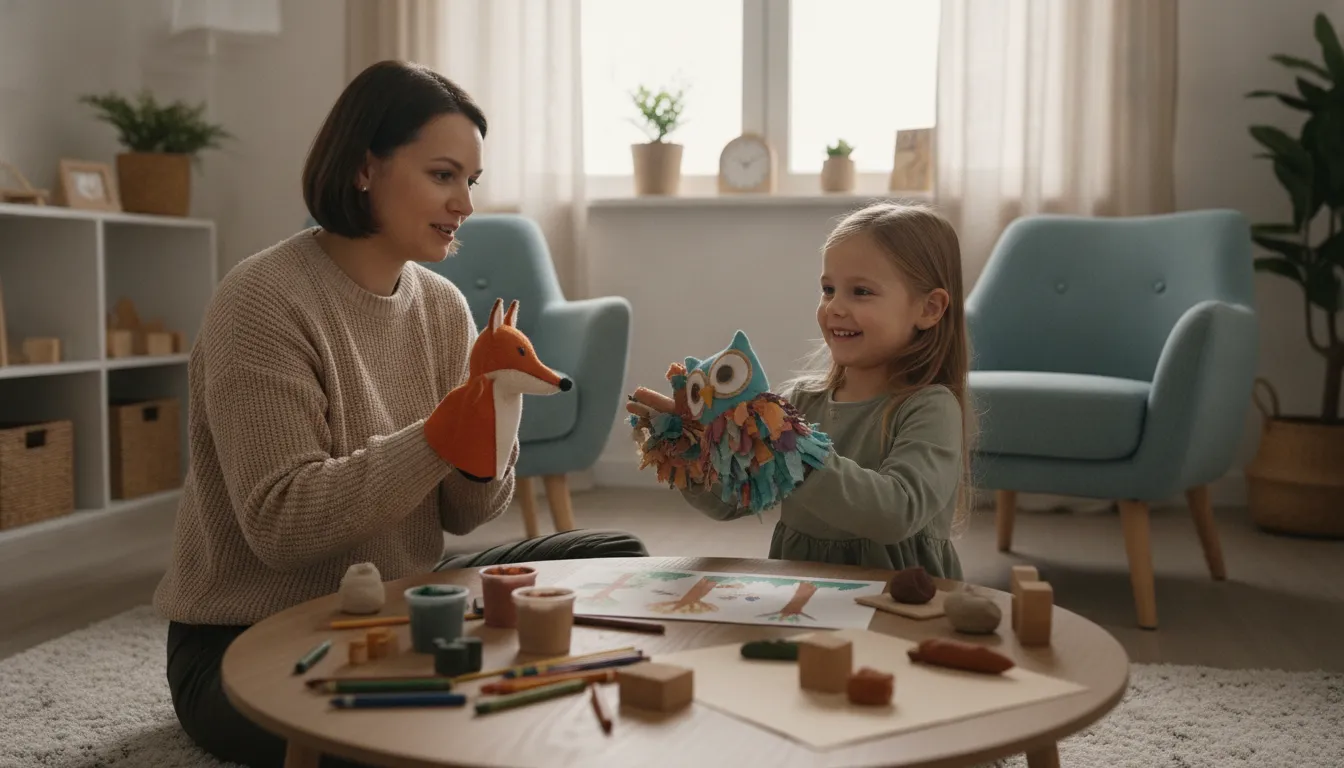
Parents and caregivers are important partners in a child's care, even when they are not in every therapy session. Your observations can help a therapist understand patterns, changes, and situations that may be difficult for a child to explain. Consider noting when concerns arise, what happens before and after them, and what seems to help. Specific examples are usually more useful than labels. For instance, describing a child's behavior at bedtime or after a transition gives the therapist information to explore without assuming what it means.
At the beginning of treatment, ask the therapist how caregiver updates, confidentiality, and safety concerns will be handled. Children often need a private, age-appropriate space to communicate. Respecting that space can help preserve trust. At the same time, parents should understand how the therapist will share general themes, progress, recommendations, and any concerns that require caregiver involvement. The exact approach may depend on the child's age, the treatment setting, and applicable laws and professional standards.
A therapist may suggest simple ways to reinforce emotional vocabulary, calming strategies, problem-solving, or connection through everyday play. Follow the guidance that fits your family, and keep it brief and natural. Reading together, offering choices, naming feelings, or setting predictable routines may create opportunities for practice. Avoid asking a child to explain every drawing, game, or pretend story. Play can have personal meaning, but interpreting it at home without clinical context may create pressure or misunderstandings.
Share relevant changes with the therapist, such as a move, school concern, family transition, medical issue, or change in sleep. With appropriate consent, coordination with a pediatrician, school team, or another provider may offer a fuller picture. Also tell the therapist about your family's cultural values, language preferences, faith traditions, and expectations about emotional support. If a child communicates more comfortably in another language, ask about interpretation or multilingual care rather than relying on the child to translate sensitive information.
Play therapy is individualized, and parents may have questions about whether it is a good fit for their child. A qualified mental health professional can discuss the child's needs, explain the treatment approach, and recommend next steps without promising a particular outcome. For questions about scheduling or service fit, families can contact Renewal of the Mind.
Call (571) 264-8192 to discuss questions about your child's care.
For families in Fairfax, Arlington, and nearby Northern Virginia communities, the right starting point is often a conversation about fit. There is no universal approach. Ask how a clinician works with children, how caregivers participate, and whether the setting matches your child's age, communication style, and needs.
| Question | Why it matters |
|---|---|
| What ages and concerns do you typically support? | Experience with a child's developmental stage can help guide the initial discussion and treatment plan. |
| How do you involve parents or caregivers? | Caregiver updates and practical home support can help connect therapy with daily life while respecting the child's privacy. |
| Do you offer in-person and telehealth sessions? | Understanding the available format helps families consider travel, routine, privacy, and the child's comfort with remote care. |
| What should I confirm with my insurance plan? | Coverage, deductibles, copays, authorization rules, provider participation, and telehealth benefits can differ by plan. |
Renewal of the Mind is based in Fairfax and serves families throughout Northern Virginia. The practice offers in-person counseling as well as HIPAA-compliant telehealth within Virginia, subject to clinician fit and scheduling. Its team includes art therapists, which may give some children another developmentally appropriate way to communicate and explore feelings. Families can learn more about child play therapy services and discuss which approach may be appropriate.
Insurance participation does not mean every plan, service, clinician, or session format is covered. Renewal of the Mind reports participation with more than 13 major carriers, including Medicaid. Parents should confirm benefits and expected costs with both the plan and the practice before beginning care. For families exploring trauma-focused options, this related guide explains therapy for children processing trauma.
A licensed mental health professional can help you evaluate options without assuming a diagnosis from a child's behavior. Availability and clinical fit should be confirmed during an intake conversation.
Call (571) 264-8192 to discuss child play therapy options.
Play therapy is a structured form of child counseling that uses play as a developmentally appropriate way for children to communicate. Explore feelings, practice skills, and work through concerns. A trained therapist guides the process and considers the child's age, development, family context, and goals rather than treating play as a stand-alone activity. The Association for Play Therapy describes play therapy as theoretically based and grounded in children's normal communication and learning processes.
It may be considered for preschool and school-age children who are having difficulty managing emotions, adjusting to a transition, socializing, or coping with behavioral or traumatic experiences. Research commonly describes play therapy for children around ages 3 to 12, but age alone does not determine fit. A clinician can help you decide whether this approach matches your child's communication style, needs, and goals. A clinical review discusses its use with preschool and school-age children.
The therapist may observe how your child uses toys, games, art materials, storytelling, or other activities, while creating a predictable and supportive setting. Some sessions are more child-led, and others include structured activities or therapist guidance. Parents may share observations, discuss goals, and learn ways to support progress at home. The exact format depends on the child's needs and the clinician's approach.
Ask about the clinician's training, experience with your child's concerns, approach to caregiver involvement, privacy practices, language access, fees, and whether in-person or telehealth appointments are available. Renewal of the Mind offers in-person and HIPAA-compliant telehealth services throughout Northern Virginia. An initial consultation can clarify whether play therapy or another form of support is the most appropriate next step.
Learning more about your child's needs with a qualified professional can help you consider whether play therapy is an appropriate option. A clinician can listen to your concerns, answer questions, and discuss child therapy options in the context of your family's goals. This information is educational and is not a diagnosis or a substitute for professional mental health care.
Our compassionate team at Renewal of the Mind is here to help — whether you’re navigating anxiety, trauma, relationship challenges, or simply need someone to talk to. We offer in-person and telehealth sessions across Northern Virginia.