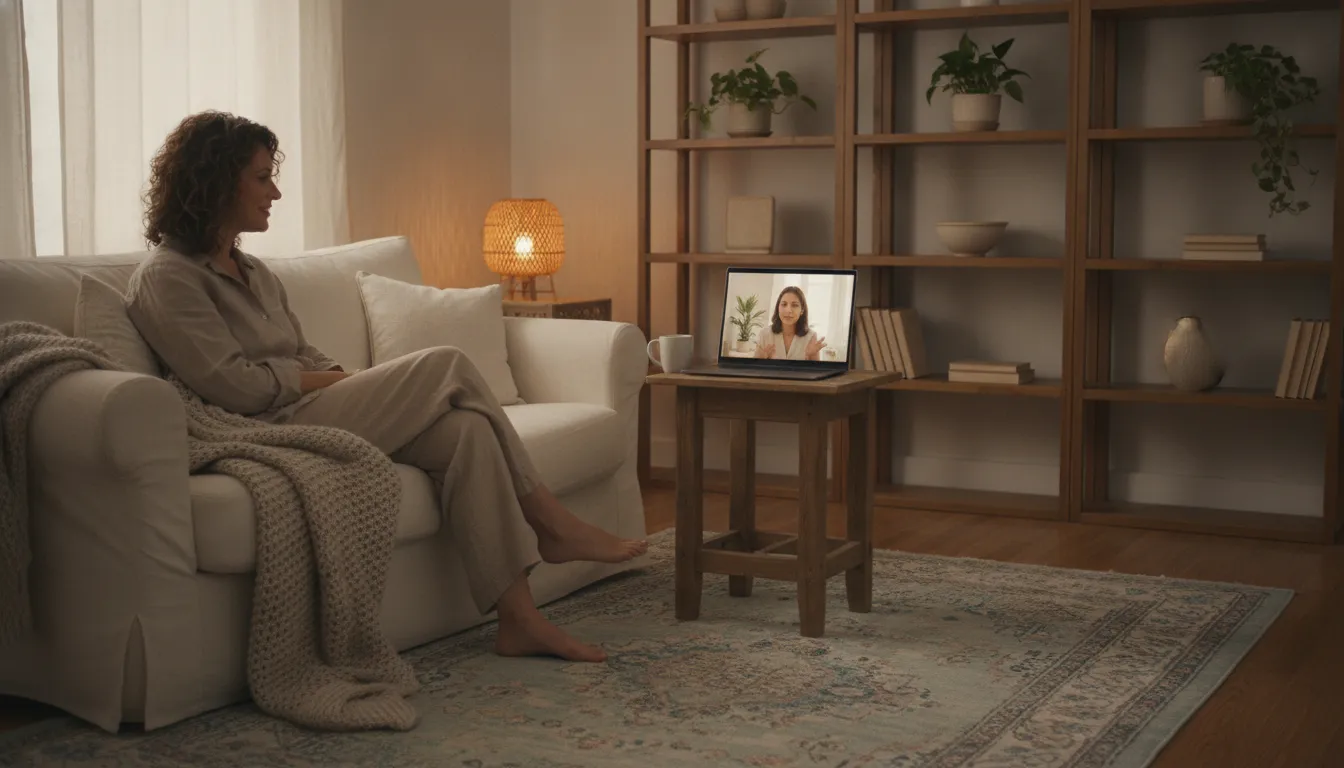
Renewal of the Mind is a Fairfax, VA psychotherapy practice serving individuals, couples, families, children, teens, and adults across Northern Virginia. Our team provides supportive, culturally aware, and personalized care designed around each client’s unique needs.

When work, commuting, childcare, or distance makes shared appointments difficult, online marriage counseling can give couples a practical way to seek support together. The setting may be different, but meaningful therapy still depends on privacy, shared participation, and a plan shaped around the relationship.
Call (571) 264-8192 to discuss couples counseling options.
Online marriage counseling uses secure, HIPAA-compliant telehealth sessions with a licensed professional. Couples in Virginia can join from a private location, talk through concerns, and work collaboratively on goals. Online care can be combined with in-person counseling when that arrangement is appropriate for the couple and their therapist.
This guide explains how a virtual appointment works, what to expect in a first session, and how to compare online and in-person care. It also covers privacy, technology, Virginia telehealth logistics, provider questions, and situations in which a different format may be more appropriate.
Online marriage counseling brings a structured couples therapy appointment to a private location through secure video. A licensed professional guides the conversation, makes room for both perspectives, and shapes care around the couple's concerns. Renewal of the Mind offers HIPAA-compliant telehealth for Virginia clients and in-person counseling at its Fairfax office.
Each partner should plan to join from a quiet location where the conversation cannot be overheard. This may be a room at home, a private office, or another setting that allows both people to speak openly. Headphones can add privacy when others are nearby. Check the camera, microphone, internet connection, and device battery before the appointment.
It can also help to silence notifications, avoid multitasking, and agree to let each person finish speaking. These steps do not replace clinical guidance, but they can reduce distractions during a sensitive conversation. Couples who want general telehealth information can review Renewal of the Mind's online therapy options.
Both partners may participate from the same private location or, when appropriate, from separate private locations. The counselor creates structure for the session and makes space for each person's perspective. Discussion may include communication, recurring conflict, trust, family concerns, intimacy, or another relationship issue.
Therapy is collaborative. The counselor and couple can clarify priorities, discuss what feels manageable, and determine which areas to address over time. Online counseling is not a promise of a particular result. Every relationship has different needs, and the treatment plan should reflect the couple's circumstances.
Couples can also review the couples counseling information before contacting the practice. The page describes the relationship-focused service within the practice's broader psychotherapy offerings.
A first virtual session gives the couple and therapist time to understand the relationship, the concerns bringing you in, and the support that may be useful. The conversation is collaborative, not a test either partner can pass or fail. The therapist can review privacy, technology, scheduling, and goals for care.
The first conversation may focus on what led you to seek help now. The therapist may invite each partner to describe the relationship in their own words, including important history, current stressors, and areas where you feel stuck. You do not have to share every detail at once. Start with what feels most important.
You may also talk about goals. One couple may want to communicate more clearly during disagreements. Another may be trying to rebuild trust, make a decision about the future, or create healthier ways to handle recurring conflict. Goals can change as the therapist learns more about your circumstances.
The therapist may pay attention to how concerns are raised, how each partner responds, and what happens when a conversation becomes difficult. These patterns are not labels or diagnoses. They are information that can help everyone understand where conversations tend to break down and where new approaches may be possible.
You may be invited to describe a recent disagreement or consider what each person needs to feel heard. If discussing a specific event feels too intense, you can say so and ask to slow down. A compassionate approach respects personal boundaries and gives both partners room to participate.
Near the end, the therapist may summarize what they heard, clarify questions, and discuss possible next steps. The plan may include areas to explore, communication strategies, or questions for a future session. Session length, frequency, and treatment plans vary by couple. You remain part of deciding what support fits your needs.
Before beginning, ask how the practice handles scheduling changes, privacy concerns, and a lost connection. Reviewing the practice's psychotherapy services can also help you understand how couples care fits within the broader range of support.
Privacy planning is an important part of online marriage counseling. Each partner should know who can hear the session, where the conversation will take place, and what to do if someone enters the room. A secure platform matters, but privacy also depends on the couple's physical setting, device habits, and communication with the counselor.
Use a room, office, or other location where conversations cannot be overheard. If children, roommates, or other household members may interrupt, discuss a backup location before the appointment. Headphones can provide an additional layer of privacy, but they do not replace a private room.
Some couples join from the same room. Others participate from separate private locations because of work, travel, or scheduling. Tell the therapist where each partner is located at the start of the session. The counselor can help discuss whether the arrangement is workable and how to handle interruptions.
Use a personal device when possible, update the operating system, and avoid recording a session unless the therapist and both partners have discussed it. Keep appointment links and session details private. For general scheduling questions, use the practice's contact page, and avoid placing sensitive personal information in an unsecured message.
Privacy questions are reasonable to ask before care begins. A qualified provider can explain the platform, participation expectations, and steps for a lost connection without asking you to share more personal information than is necessary.
Both online and in-person counseling can give couples a structured setting to talk with a licensed professional. The better fit depends on location, schedule, privacy needs, comfort with technology, and what helps each partner participate openly. Online marriage counseling is available to Virginia residents through telehealth, while Renewal of the Mind offers in-person care at its Fairfax office.
| Consideration | Online counseling | In-person counseling |
|---|---|---|
| Access | Can support couples across Virginia, including those outside Fairfax and Northern Virginia. | Requires travel to the Fairfax office, which may be convenient for couples who live or work nearby. |
| Setting | Takes place in a private location selected by the couple. | Offers a dedicated counseling environment away from household routines. |
| Technology | Requires a dependable connection, suitable device, and comfort joining video. | Does not require video equipment or troubleshooting during the appointment. |
| Privacy | The couple must plan for a private space and protect session details at home. | The office provides a separate setting, while privacy still matters before and after the visit. |
| Commuting | Removes the trip to and from the office, which may simplify scheduling. | Travel time is part of the appointment, but some couples value the transition. |
Virtual care may suit couples who live far from the office, have demanding schedules, share caregiving responsibilities, or prefer to meet from a familiar setting. It may also help when one partner's work or transportation makes a traditional appointment difficult. Practical convenience matters because consistent participation can support continuity.
In-person counseling may be preferable when home does not provide enough privacy, technology is unreliable, or either partner finds face-to-face conversation more comfortable. Some couples appreciate having a clear boundary between the counseling environment and everyday routines. A counselor can help discuss which setting is appropriate.
There is no universal rule that one format is better for every couple. The decision should account for privacy, clinical fit, and the couple's ability to participate meaningfully. Couples in Fairfax can learn more about the practice's team and approach before choosing a format.
Call (571) 264-8192 to discuss your preferred counseling format.
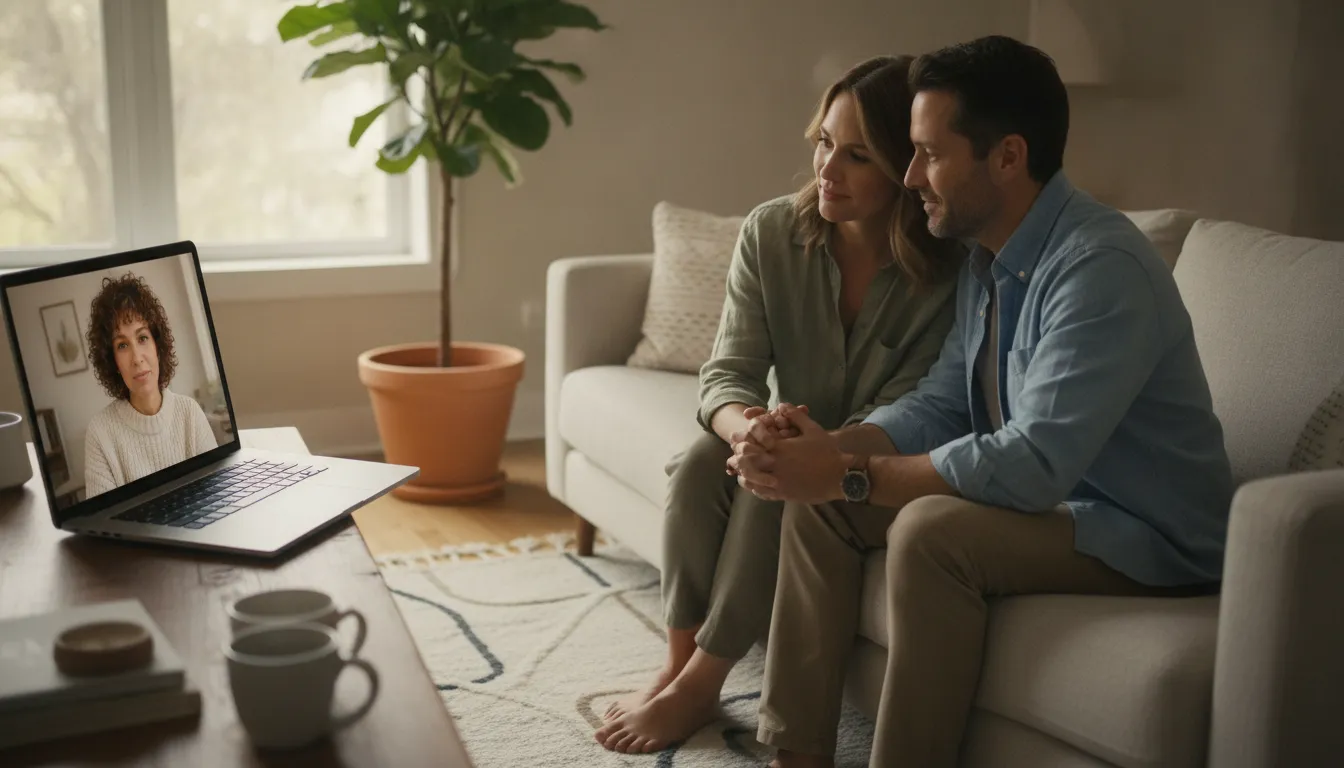
Online marriage counseling can be a useful option, but it is not automatically the right setting for every couple or every session. A counselor should consider whether both partners can participate privately, communicate safely, use the technology, and engage in the proposed format. Discussing these factors with a qualified professional is an important first step.
A virtual appointment works best when both partners have a real opportunity to speak, listen, and take part in the conversation. One person should not control the device, answer every question, or prevent the other from participating. Separate private locations may be considered when appropriate, but the arrangement should be discussed with the counselor in advance.
Choose a space where other people cannot overhear the session. Headphones may help, and partners can agree on how to handle interruptions. If either person cannot speak freely at home, say so before the session. A professional can help explore alternatives rather than assuming that virtual care is workable.
Some couples communicate comfortably over video, while others find the format tiring or less natural. Delays, camera angles, and distractions can affect how a conversation feels. These concerns do not mean online care cannot work, but they are worth naming. The counselor can adjust the pace, structure, or format when clinically appropriate.
Information on a website cannot determine clinical fit. Couples can ask questions about their situation without sharing identifying details in an initial inquiry.
Choosing a counselor involves more than selecting the first available video appointment. Virginia couples should ask about licensure, telehealth eligibility, clinical experience, privacy procedures, scheduling, and payment. A clear intake conversation can help identify whether a provider's services and approach match the couple's needs before a first appointment.
Ask whether the clinician is licensed to provide services where each partner is located during the appointment. Telehealth rules and practice arrangements can vary, especially when partners join from different locations. The provider should explain any location requirements before care begins.
Consider whether the counselor's experience aligns with the concerns you want to address. Couples may be seeking help with communication, conflict, trust, family changes, intimacy, or another relationship concern. You do not need to share every private detail during an initial inquiry, but a broad description can help with matching.
Ask which secure platform is used, how joining instructions are provided, and what happens if the connection fails. You can also ask what you should do to prepare a private space. Renewal of the Mind describes its online therapy as HIPAA-compliant telehealth and serves clients throughout Virginia.
Think about whether both partners can attend consistently at the proposed time. Ask how appointments are scheduled, how changes are handled, and whether hybrid care may be possible. Coverage depends on the plan, clinician, service, and other details. Ask the practice about accepted insurance and private-pay policies, then confirm plan-specific information with your insurer.
Before starting online marriage counseling, couples can ask about licensure, privacy, session structure, technology, scheduling, payment, and clinical fit. The answers cannot predict the outcome of therapy, but they can clarify the process and help both partners decide whether the proposed format feels workable for their circumstances.
For related reading, the guide to signs you may need marriage counseling offers another way to reflect on whether support may be useful. Couples considering individual support can also review the practice's Virginia online therapy resource.
Use the practice's contact page for general scheduling questions. Reading online information is not a diagnosis and cannot replace an individualized conversation with a qualified professional.
Call (571) 264-8192 to discuss whether online marriage counseling may fit your needs.
Online marriage counseling uses secure video sessions so a couple and licensed professional can meet from a private location. The counselor guides discussion, helps both partners participate, and works with the couple to identify goals and possible next steps.
Online and in-person counseling are different formats, and neither is right for every couple. The best choice depends on privacy, technology, clinical fit, location, scheduling, and each partner's ability to participate openly. Discuss the options with a qualified professional.
The first session may include introductions, questions about what brings you to counseling, relationship history, goals, privacy, and the telehealth process. The therapist may summarize what they hear and discuss possible next steps with both partners.
Coverage varies by plan, provider, service, and other factors. Ask the practice about accepted insurance and private-pay policies, then contact your insurer for plan-specific information. Do not assume that benefits are the same for every service or setting.
Renewal of the Mind offers HIPAA-compliant telehealth throughout Virginia, subject to clinician availability, licensing requirements, privacy, and clinical appropriateness. Ask the intake team whether the service can support your locations and needs.
If you are considering virtual couples counseling, a brief conversation with a qualified intake team can help you understand scheduling. Therapist matching, privacy, payment, and whether online or in-person care may fit your situation. Renewal of the Mind serves couples and families in Fairfax and throughout Virginia through online and in-person options.
Contact the practice with general questions and avoid sharing sensitive personal details in an unsecured message. A clinician can discuss your concerns privately and help identify an appropriate next step.
Call (571) 264-8192 to discuss online marriage counseling in Virginia.
Healthcare disclaimer: This article provides general educational information and is not a diagnosis, treatment plan, or substitute for professional mental health care. Online counseling may not be appropriate for every person or situation. Discuss your needs with a qualified mental health professional. If you are in immediate danger or experiencing a mental health emergency, contact local emergency services or an appropriate crisis resource.
Our compassionate team at Renewal of the Mind is here to help — whether you’re navigating anxiety, trauma, relationship challenges, or simply need someone to talk to. We offer in-person and telehealth sessions across Northern Virginia.