Renewal of the Mind is a Fairfax, VA psychotherapy practice serving individuals, couples, families, children, teens, and adults across Northern Virginia. Our team provides supportive, culturally aware, and personalized care designed around each client’s unique needs.

When a child's behavior begins to affect home routines, learning, friendships, or family connection, parents may wonder whether extra support is needed. Seeking guidance does not mean you have failed or that your child is being judged. It can be a practical way to understand what is happening and identify skills that may help.
Call (571) 264-8192 to discuss support for your child.
Children's behavioural therapy is a structured, age-appropriate form of support that can help children build coping, communication, emotional regulation, and problem-solving skills. Sessions may involve caregivers, conversation, play, or other activities, depending on the child's age, needs, and communication style. A qualified clinician evaluates the child and works with the family to develop an individualized plan.
This guide explains what therapy may support, what families can expect from sessions, and how play-based and behavioral approaches can work together. Start by looking at the concerns affecting your child's daily life and the kinds of support a clinician may consider.
In brief: Children's behavioural therapy is designed to help a child notice patterns in thoughts, feelings, and actions, then practice coping and communication skills that may support daily functioning. The focus is not on labeling a child as "bad" or assuming a diagnosis. A qualified mental health professional considers the child's individual needs, relationships, development, and environment before recommending an approach.
Parents may seek support when a child's reactions, routines, or interactions are creating distress or interfering with life at home, school, or in the community. Behaviour is useful information, but it is not the same as a diagnosis. A child who becomes overwhelmed, avoids an activity, argues frequently, or struggles to shift attention may be responding to many possible factors. Therapy can explore what happens before and after a behavior, what the child may be communicating, and which skills could be strengthened.
Depending on the child's age and goals, sessions may introduce ways to identify feelings, pause before reacting, ask for help, tolerate frustration, solve problems, or communicate needs. These skills are intended to be practical. A clinician might help a child rehearse what to do when a classroom task feels difficult. The child can also practice responses to sibling conflict or changes in plans. The work is adjusted to the child's developmental level and may involve caregivers directly, particularly with younger children.
The Centers for Disease Control and Prevention explains that psychological therapy may teach children coping skills. These skills can help them manage symptoms and function at home, in school, and in their community. Learn more from the CDC about mental health treatment for children.
Behavioural work often gives children opportunities to practice a new response in a supportive setting. Caregivers may learn how to make expectations clearer, notice effort, and reinforce helpful behaviors consistently. Positive reinforcement does not mean ignoring difficult behavior or rewarding every action. It means recognizing a specific skill or step forward, such as using words to express frustration or returning to a task after a break. A clinician can help a family choose strategies that fit its values, routines, culture, and circumstances.
Goals may include improved participation, emotional regulation, communication, relationships, or confidence with daily tasks. Progress is not guaranteed and may look different from one child to another. A comprehensive evaluation is an important starting point for determining whether therapy is appropriate and for developing an individualized plan. This article is educational and cannot replace an evaluation or personalized guidance from a licensed professional.
A first session usually begins with an age-appropriate conversation about what brings the family in and what the child has been experiencing. A qualified mental health professional may speak with the caregiver, spend time with the child, or do both. The goal is to understand the child in context rather than view one behavior in isolation. A comprehensive evaluation can help the clinician determine what type of support may fit the child and family, as the CDC explains.
Caregivers may be asked about routines, emotions, sleep, school experiences, relationships, major changes, and situations in which concerns appear. Depending on the child's age and needs, the clinician may also invite information from teachers or other adults who know the child well. This can show how the child responds across settings, while still respecting privacy and the family's decisions about what information to share.
The clinician and family can then identify practical goals. These might include helping a child name feelings, pause before reacting, follow routines, communicate needs, or practice a coping strategy during a difficult moment. Goals should be collaborative and specific enough to revisit over time. They may change as the clinician learns more about the child's strengths, needs, and environment.
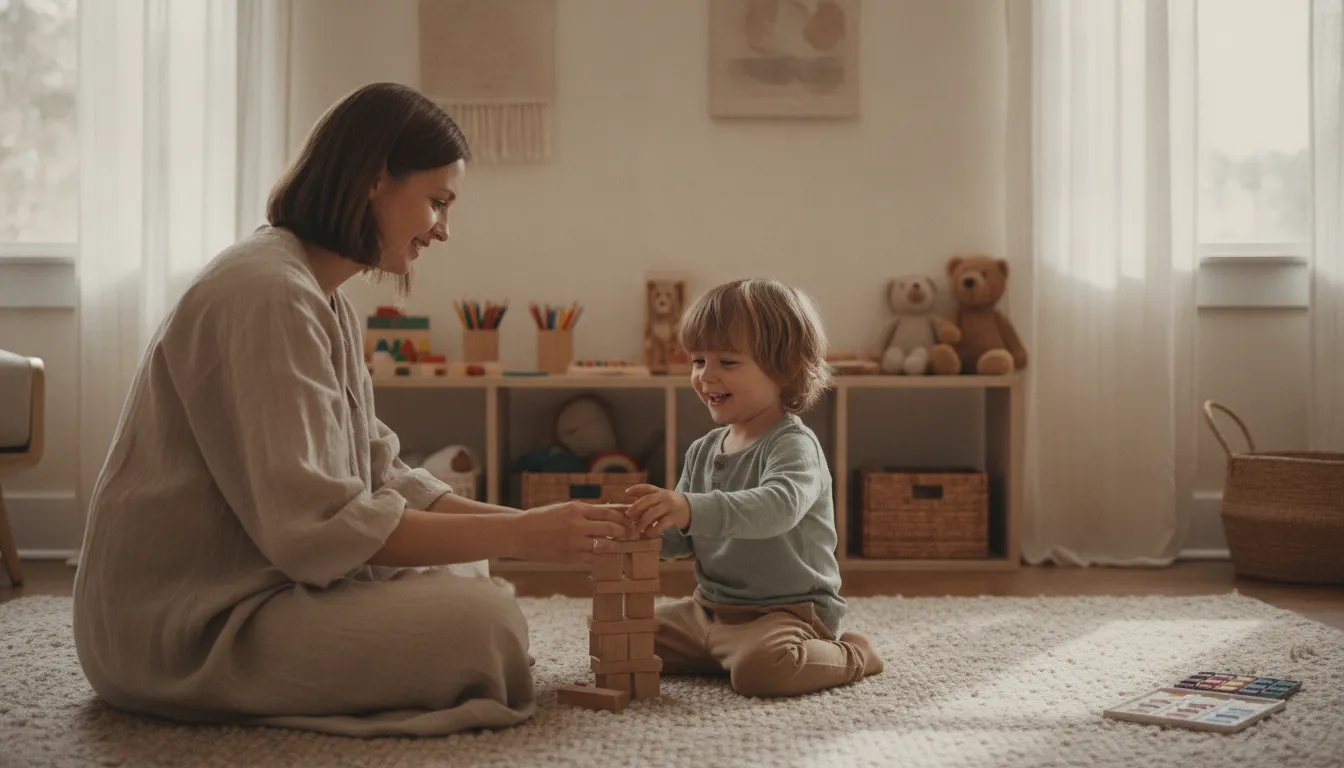
Children do not always explain their thoughts and feelings through direct conversation. Therapy may include talking, playing, drawing, role-play, movement, stories, or other activities that make communication feel more natural. For a younger child, a therapist may observe play and use simple choices, games, or visual tools. An older child may prefer conversation, skill practice, or examples connected to friendships, school, and home life. These activities are not a test of whether a child is behaving correctly. They give the clinician ways to listen, connect, and introduce skills without demanding adult-level language.
Families interested in an activity-based approach can learn more about play therapy for children. Play therapy and behavioral therapy are related but not identical approaches, so a clinician can help determine what combination best matches the child's situation.
Parents and caregivers are often active participants, especially when children are young. A therapist may share observations, model a communication or coping strategy, and invite caregivers to practice it during everyday routines. The conversation may also include classroom demands, peer relationships, cultural or family values, and changes at home. This home-and-school context helps keep goals realistic and gives caregivers a chance to ask questions. A session should leave the family with clearer next steps, not a demand to be perfect. The plan remains individualized and may be adjusted as the child's needs and responses become clearer.
Children may show stress through behavior, emotions, body sensations, or changes in how they manage daily routines. Behavioral therapy can provide a structured, supportive setting to build coping, communication, attention, and problem-solving skills. It is not a way to label a child based on a few signs, and a behavior alone does not establish a diagnosis.
A qualified mental health professional can consider the child's age, development, relationships, environment, and individual history before recommending care. The Centers for Disease Control and Prevention notes that early mental health support may reduce difficulties at home, school, and in friendships while supporting healthy development. Learn more from the CDC about children's mental health treatment.
A child who worries frequently may avoid activities, seek repeated reassurance, have trouble separating from a caregiver, or become irritable when plans change. Therapy may help a child notice emotional and physical signals, name feelings, practice calming strategies, and gradually approach age-appropriate challenges with support. These skills can also be useful when strong frustration, sadness, anger, or disappointment leads to outbursts or difficulty recovering.
Some children need support with skills such as starting tasks, following directions, waiting, shifting attention, managing impulses, or remembering routines. These needs can affect homework, chores, play, and relationships. A clinician can help identify which skills need practice and work with caregivers on realistic strategies. When an ADHD evaluation is appropriate, information may be gathered from parents, teachers, caregivers, coaches, and others who know the child in different settings, as described by Mayo Clinic.
Behavioral support may be considered when repeated arguing, aggression, defiance, impulsivity, or intense reactions interfere with family life, learning, friendships, or participation in activities. The goal is not to shame a child or demand perfect behavior. A therapist may explore what happens before and after a challenging moment, teach replacement skills, and help adults respond consistently and compassionately. Because behavior can reflect many different needs, an evaluation matters before choosing an approach.
After a frightening, upsetting, or destabilizing experience, a child may have sleep changes, avoidance, irritability, withdrawal, concentration difficulties, or heightened reactions. These signs do not prove trauma or any particular condition, but they deserve thoughtful attention. A clinician with relevant training can assess the child's experience and recommend an individualized plan. At Renewal of the Mind, trauma-focused approaches such as Cognitive Behavioral Therapy for children may be considered when clinically appropriate.
Call (571) 264-8192 to discuss support for your child.
Children do not all communicate their needs through direct conversation. Play, drawing, movement, and age-appropriate activities can give a clinician useful ways to understand a child's experience while helping the child participate in therapy. The Centers for Disease Control and Prevention notes that therapy with children may include talking, playing, or other activities that support expression of feelings and thoughts: CDC guidance on children's mental health treatment.
These methods can be coordinated, but they are not interchangeable. A clinician considers the child's age, communication style, concerns, developmental needs, and evaluation findings when recommending an approach. The goal is not to force a child into a particular model. It is to choose support that feels understandable and clinically appropriate for that child and family.
| Approach. | Primary focus. | How it may look. |
|---|---|---|
| Behavioral skills work. | Building coping, communication, emotional regulation, and daily functioning skills. | Practicing a skill, noticing patterns, setting an achievable goal, and reinforcing progress with caregiver support. |
| Play therapy. | Using play as a developmentally appropriate way to explore feelings, relationships, and experiences. | A child may use toys, stories, or imaginative play while the clinician observes, joins, and guides the process. |
| Art therapy. | Supporting expression when putting feelings into words is difficult. | Drawing, painting, or another creative activity may help a child communicate and reflect without relying only on conversation. |
| CBT and trauma-focused approaches. | Addressing unhelpful thought and behavior patterns, or symptoms connected with distressing experiences. | Age-appropriate education, coping practice, and carefully paced therapeutic work guided by a trained clinician. |
For younger children, caregivers often take an active role. They may learn how to respond consistently, practice skills between sessions, and share observations from home or school.
A child may therefore receive behavioral skills coaching alongside play therapy for children, rather than choosing one approach exclusively.
When trauma-related concerns are part of the evaluation, a clinician may consider a trauma-focused plan instead of treating every behavior as a general skills problem. Renewal of the Mind provides Cognitive Behavioral Therapy (CBT) for children and other specialized support. A qualified mental health professional can explain which methods fit the child's needs and how caregivers can participate.
Parents do not need to wait for a crisis before asking for support. Consider a consultation when a child's emotional or behavioral difficulties are persistent, intense, or beginning to interfere with everyday life. The goal is not to label a child based on a challenging moment. It is to understand what may be contributing to the concern and identify age-appropriate ways to help.
A child may benefit from an evaluation when distress or disruption continues across days or weeks, or when familiar strategies no longer seem helpful. Examples can include frequent emotional outbursts, trouble calming after becoming upset, ongoing worry, marked frustration, or difficulty following routines. These behaviors can have many possible explanations, including stress, changes at home, developmental differences, communication needs, or experiences the child has found difficult.
It may also be time to seek guidance when concerns affect more than one part of the child's life. Parents might notice a drop in school participation, repeated conflict with peers or siblings, withdrawal from activities, disrupted family routines, or strain in the parent-child relationship. A clinician can help look at the pattern without assuming that a diagnosis is present. Early mental health support may reduce problems at home, school, and in friendships and support healthy development, according to the CDC.
Safety concerns deserve prompt attention. If a child may hurt themselves or someone else, or cannot be kept safe. Seek immediate help through local emergency services or a crisis resource rather than waiting for a routine appointment.
One difficult day, a tantrum, or a temporary change in mood does not by itself indicate a mental health condition. A qualified mental health professional gathers context before recommending support. This may include asking about the child's development, health, sleep, routines, relationships, school experience, recent stressors, and strengths. Depending on the concern and the child's age, information from caregivers, teachers, or other adults who know the child may help show how behavior changes in different settings. A comprehensive evaluation is the first step toward deciding whether therapy is appropriate and what type of plan may fit.
Before the appointment, write down what you have observed, when it began, where it happens, and what seems to make it better or worse. Bring questions about goals, caregiver participation, session format, privacy, and communication with school. Your child may not be able to explain everything directly, so examples are more useful than labels. Be open about family culture, language, routines, and practical barriers. These details help the clinician build a respectful plan around your child's needs.
Call (571) 264-8192 to discuss support for your child.
Consider an evaluation when behavioral or emotional concerns persist, cause distress, disrupt home or school life, affect friendships, or create significant family strain. A qualified mental health professional can gather context and help determine whether therapy or another form of support is appropriate. Seeking guidance early may reduce problems at home, school, and in relationships, according to the Centers for Disease Control and Prevention.
Examples may include practicing coping and communication skills, identifying triggers, building routines, and learning age-appropriate ways to respond to strong emotions. Sessions can involve conversation, play, or other activities rather than talking alone. The clinician adapts goals and activities to the child's age, needs, and daily environments.
Play therapy is not identical to behavioral therapy, but play can give children a developmentally appropriate way to express thoughts and feelings. A therapist may observe themes in play, model skills, and involve caregivers in reinforcing communication and coping outside sessions. The CDC notes that children's therapy can include talking, playing, and other activities.
Cognitive Behavioral Therapy may be one part of an individualized plan for skills such as organization, emotional regulation, or managing frustration. A clinician should first assess the child's experiences across settings. For some evaluations, information from parents, teachers, caregivers, or coaches helps show how behavior differs in daily situations, as described by Mayo Clinic.
Ask the clinician which skills to practice, use consistent and realistic expectations, notice effort, and create opportunities for your child to communicate feelings. Caregiver participation is common, especially with younger children. Share observations about sleep, school, relationships, and home routines so the plan can be adjusted thoughtfully.
A thoughtful evaluation can help clarify your child's needs and identify therapy options that fit your family, goals, and circumstances. A qualified clinician can listen to your concerns, answer questions, and discuss an individualized next step without assuming one approach works for every child.
Call (571) 264-8192 to discuss an evaluation and child therapy options.
This article is for general education and does not replace professional evaluation or care.
Our compassionate team at Renewal of the Mind is here to help — whether you’re navigating anxiety, trauma, relationship challenges, or simply need someone to talk to. We offer in-person and telehealth sessions across Northern Virginia.