Renewal of the Mind is a Fairfax, VA psychotherapy practice serving individuals, couples, families, children, teens, and adults across Northern Virginia. Our team provides supportive, culturally aware, and personalized care designed around each client’s unique needs.

Children experience pain, confusion, loss, and fear just as deeply as adults do. The difference is that they often lack the verbal language to explain what they are carrying inside. A child who has witnessed a traumatic event, lost a parent, or is struggling with anxiety may not be able to sit across from a therapist and articulate what is wrong. That is not a failure of the child. It is simply how children’s brains are wired. Art therapy for children offers a different way in — one that meets young clients exactly where they are, using drawing, painting, clay, and collage as a language when spoken words fall short.
At Renewal of the Mind in Fairfax, Virginia, our team includes three registered art therapists (ATR-P) who specialize in using creative expression to help children and adolescents work through some of life’s hardest moments. Contact us today to schedule a consultation.
Art therapy is a form of psychotherapy that uses the creative process of making art to improve and enhance the physical, mental, and emotional well-being of individuals. Unlike an art class, the focus in art therapy is never on producing a “good” piece of work. What matters is the process itself — what happens as a child picks up a paintbrush, tears paper for a collage, or presses clay between their palms.
Art therapists are credentialed mental health professionals who hold graduate-level training in both psychotherapy and studio art. The American Art Therapy Association (AATA) sets rigorous standards for the ATR (Art Therapist Registered) credential, which requires a master’s degree, supervised clinical hours, and passing a national examination. This distinguishes registered art therapists from art teachers or recreational therapists who may incorporate art activities but are not trained in clinical assessment and treatment.
At Renewal of the Mind, our art therapists hold the ATR-P (Provisional) credential and earned their Master of Arts in Art Therapy from The George Washington University, one of the nation’s leading art therapy graduate programs. They practice under clinical supervision as required by Virginia licensure standards, bringing the full rigor of the profession to every session.
Traditional talk therapy assumes a shared verbal framework between therapist and client. That framework simply does not exist for many children, especially younger ones. Developmental psychology tells us that children’s brains are not fully equipped for abstract verbal reasoning until adolescence. Asking a seven-year-old to “describe how that made you feel” is a bit like asking them to write an essay in a language they haven’t fully learned yet.
Art therapy bypasses the verbal brain and speaks directly to the parts of the nervous system where trauma, fear, and grief live. Here is why this matters clinically:
If your child is struggling and you’re not sure where to start, schedule a free 15-minute consultation with our team to talk through next steps.
Art therapy is a versatile, evidence-informed modality that is particularly effective for children and adolescents experiencing:
Children who have experienced abuse, neglect, accidents, natural disasters, or witnessing violence often cannot (or should not) be pushed to verbally recount traumatic events in detail. Art therapy provides a contained, titrated way to approach traumatic material at the child’s own pace. The art becomes a bridge — a way to externalize and begin to make sense of experiences that feel overwhelming or unspeakable. Our team integrates trauma-responsive approaches into art therapy sessions and collaborates closely with clinicians trained in Trauma-Focused Cognitive Behavioral Therapy (TF-CBT) when a combined approach is clinically appropriate.
Childhood anxiety often shows up as stomachaches before school, meltdowns, sleep problems, or rigid rituals. Children living with anxiety frequently have trouble articulating what they are afraid of. Art therapy creates a space to visually map fears, build symbolic resources (a “worry jar” made in clay, a “safe place” drawing), and develop a sense of mastery that counters anxious helplessness.
Children grieve differently than adults. They may appear fine one moment and devastated the next. Art therapy honors the non-linear, often wordless nature of childhood grief. A child who has lost a parent, sibling, pet, or friend can create memory books, paint feelings onto paper, or build a symbolic container for their loss — all powerful ways of processing what cannot be said.
Children with ADHD, oppositional behaviors, emotional dysregulation, or impulse control challenges often benefit from the sensory, structured engagement that art-making provides. The physical, hands-on nature of working with materials can be genuinely regulating for nervous systems that struggle with stillness or verbal demands.
Divorce, a move to a new city, the arrival of a new sibling, or a change in family structure can destabilize a child’s world. Art therapy gives children a safe space to process the complexity of these changes without needing to take sides, explain, or “be fine” before they are ready.
For children who are neurodivergent, particularly those with Autism Spectrum Disorder, art therapy can provide a lower-demand, highly engaging therapeutic environment. Visual and tactile ways of communication may feel far more natural than verbal conversation, and structured creative tasks can support both self-expression and relationship-building with the therapist.
Parents often wonder what a session actually looks like. While every child’s experience is unique and art therapists tailor their approach to each client, here is a general picture of how a session might unfold:
Curious what art therapy might look like for your child specifically? Our therapists offer consultations to answer your questions. Book an appointment here.
One of the things that sets Renewal of the Mind apart in Northern Virginia is the depth of our art therapy expertise. We have three art therapy professionals on staff, each holding the ATR-P credential and graduate training from The George Washington University’s distinguished art therapy program. That concentration of specialized training is rare in a single practice.
Veronica holds a Master’s degree in Art Therapy from The George Washington University. She brings a humanistic, psychodynamic, and existential lens to her work, specializing in trauma expression through art and emotional processing through creative media. Veronica works with adolescents and adults across a range of presenting concerns.
Joshua’s practice blends traditional art materials with innovative approaches including digital media and virtual reality as therapeutic tools. He brings a trauma-responsive, client-centered approach to his work with anxiety, depression, PTSD, complex trauma, OCD, and individuals with military backgrounds. His versatility with media gives clients many pathways into the creative process.
Soyoung weaves art-based interventions with verbal counseling, creating a blended approach that draws from person-centered theory. She works with children, adolescents, and adults experiencing anxiety, depression, and trauma-related difficulties. She is also bilingual in Korean and English, extending art therapy access to the Korean-speaking community in Northern Virginia.
When you bring your child to Renewal of the Mind for art therapy, they will work with a clinician who has dedicated their graduate training to this specialty — not simply a generalist who incorporates art as one tool among many.
Art therapy is rarely used in isolation. At Renewal of the Mind, our art therapists work collaboratively with the broader clinical team. A child in art therapy may also receive individual therapy with another clinician, participate in family sessions, or benefit from a structured trauma protocol like TF-CBT. Art therapy can serve as the primary modality for a child who is not ready for verbal therapy, or as a complement that deepens and enriches the work happening in talk-based sessions.
For families navigating complex situations — separation, immigration adjustment, a child witnessing domestic violence — art therapy’s non-verbal approach can be particularly valuable at the beginning of treatment, when trust is still being established and the child may not yet have the safety or words to speak directly about what has happened.
We also recognize that healing happens in context. When a child is struggling, the whole family is often struggling too. Our therapists include specialists in family and couples therapy, and we are experienced in coordinating care across a child’s different support systems including parents, schools, and pediatric providers.
Not at all. There is no artistic skill required. Art therapy is not about producing beautiful work. A child who scribbles furiously in black crayon is communicating something just as meaningful as one who carefully renders a landscape. What matters is the process, not the product.
An art class has a goal: learn a skill, produce a piece of work. Art therapy has a different goal entirely: support emotional healing and psychological growth through the process of creating. The therapist is a trained clinician who reads the art, the child’s behavior, and the therapeutic relationship to guide treatment — not an art teacher facilitating instruction.
That is completely fine. Many children, especially early in treatment, prefer to simply create without discussing what they have made. Art therapists are trained to work with what is present in the session — the art, the child’s body language, what happens as they work — without requiring verbal disclosure. Sometimes the most therapeutic sessions are the quietest ones.
Like any form of therapy, the timeline depends on the child’s needs, the severity of what they are navigating, and how the therapeutic relationship develops. Some children make meaningful gains in a relatively short time, particularly when the presenting concern is situational (a specific loss, a school transition). Others — particularly those working through complex or developmental trauma — may benefit from a longer course of treatment. Your child’s therapist will review progress regularly and discuss the arc of treatment with you.
Renewal of the Mind is in-network with most major insurance carriers in Virginia, including Cigna, Aetna, Blue Cross Blue Shield, United Healthcare, Kaiser Permanente, and Medicaid. Art therapy sessions may be billed under a licensed mental health provider’s credentials. Our team can help you navigate coverage questions when you reach out to schedule.
Families across Fairfax County, Arlington, and Northern Virginia come to Renewal of the Mind for art therapy services. Our central Fairfax location offers easy access from the broader NoVA region, and HIPAA-compliant telehealth art therapy is available for clients who prefer to work from home or who live farther away.
If you are considering art therapy for your child, we encourage you to reach out. A brief phone consultation can help you understand whether art therapy is a good fit, what to expect from the process, and how our team can best support your family. Our clinicians take the time to understand your child’s specific situation before making any treatment recommendations.
The struggles children carry don’t disappear on their own. With the right support — and sometimes, with a paintbrush in hand — they can begin to heal.
Ready to take the next step? Schedule a consultation with our art therapy team in Fairfax, VA today.
Art therapy is effective across the lifespan, but it is particularly well-suited for children aged 3 to 18. Younger children (ages 3-7) often engage most naturally with sensory materials like finger paint, clay, and collage. School-age children (ages 8-12) frequently work through narrative imagery and structured projects. Adolescents may gravitate toward journal art, mixed media, or digital approaches. A skilled art therapist adapts the media and directives to the child’s developmental stage and individual profile.
Art therapy has been used effectively with children experiencing physical, emotional, and sexual abuse; neglect; accidents and medical trauma; grief and bereavement; natural disasters; school violence; domestic violence exposure; immigration-related trauma; and the cumulative effects of chronic stress and adverse childhood experiences (ACEs). It is often used alongside evidence-based trauma protocols like TF-CBT as part of a comprehensive treatment plan.
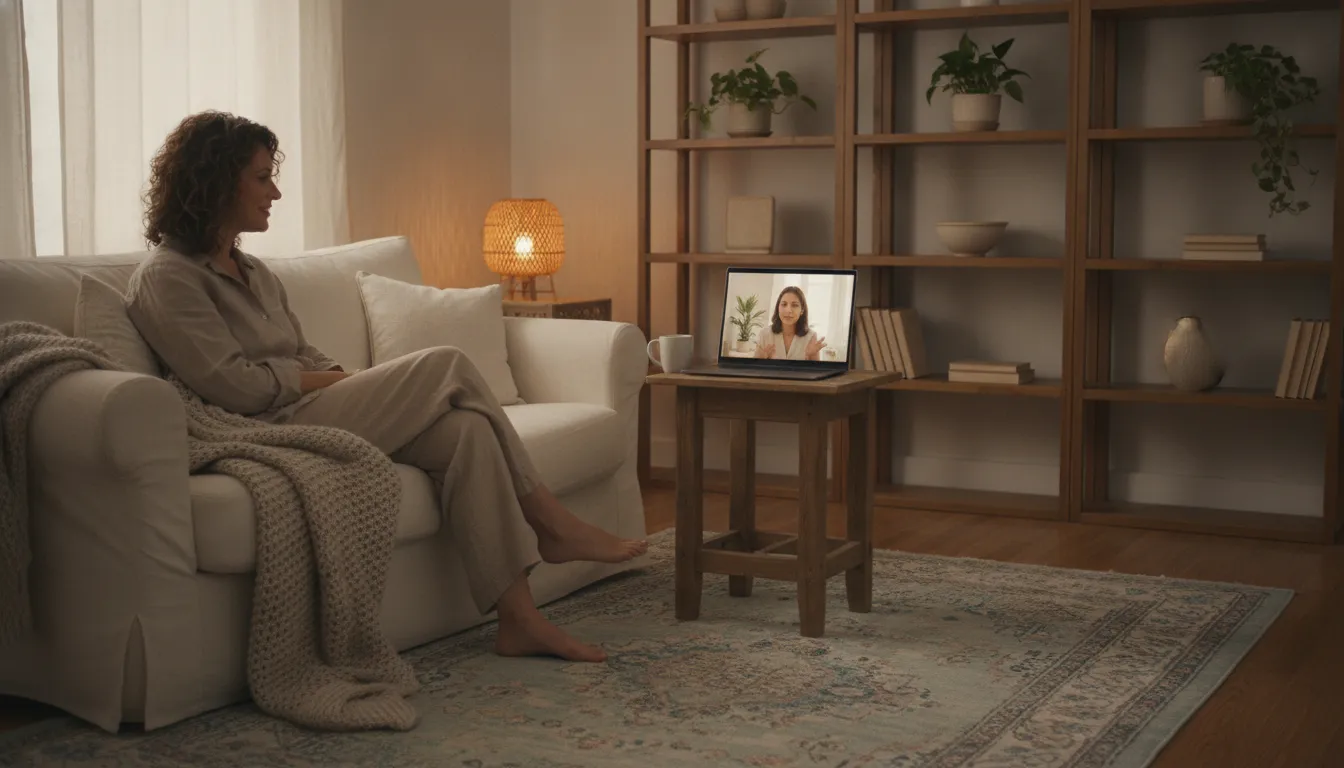
Yes. Telehealth art therapy has become an established and effective option, particularly following significant growth in remote mental health services in recent years. Sessions are adapted so that clients work with materials at home. The therapist provides guidance on what simple supplies to have available, and the session proceeds via HIPAA-compliant video platform. Many children find the home setting comfortable and conducive to creative expression.
This is a common question and often the answer is that both can be valuable — sometimes together. In general, children who are younger, who have difficulty with verbal expression, or who are working through trauma that has not yet reached the level of verbal processing may benefit most from starting with art therapy. Older children and adolescents who are more verbally expressive may do well in talk therapy, with art therapy available as a complement. A clinical consultation with our team is the best way to make a personalized recommendation for your child.
Disclaimer: This article is provided for informational and educational purposes only. It is not a substitute for professional mental health advice, diagnosis, or treatment. If you have concerns about your child’s mental health, please consult a qualified mental health professional. If your child is in crisis, call 988 (Suicide and Crisis Lifeline) or go to your nearest emergency room.
Our compassionate team at Renewal of the Mind is here to help — whether you’re navigating anxiety, trauma, relationship challenges, or simply need someone to talk to. We offer in-person and telehealth sessions across Northern Virginia.