Renewal of the Mind is a Fairfax, VA psychotherapy practice serving individuals, couples, families, children, teens, and adults across Northern Virginia. Our team provides supportive, culturally aware, and personalized care designed around each client’s unique needs.

Starting relationship therapy can feel uncertain, especially when both partners are unsure what to say or whether the conversation will become another argument. The first appointments are usually less about assigning blame and more about understanding the relationship's history, current concerns, and the patterns that keep creating distance.
Call (571) 264-8192 to discuss couple counseling in Fairfax and Northern Virginia.
In couple counseling, partners can expect a neutral setting to share their perspectives, identify shared goals, and begin practicing clearer communication with guidance from a licensed therapist.
Renewal of the Mind offers in-person sessions in Fairfax and secure telehealth options for Virginia residents. Whether you are addressing recurring conflict, rebuilding trust, or preparing for a major life transition, you can bring questions and uncertainty into the process. Understanding how the first session is structured can make that first step feel more manageable.
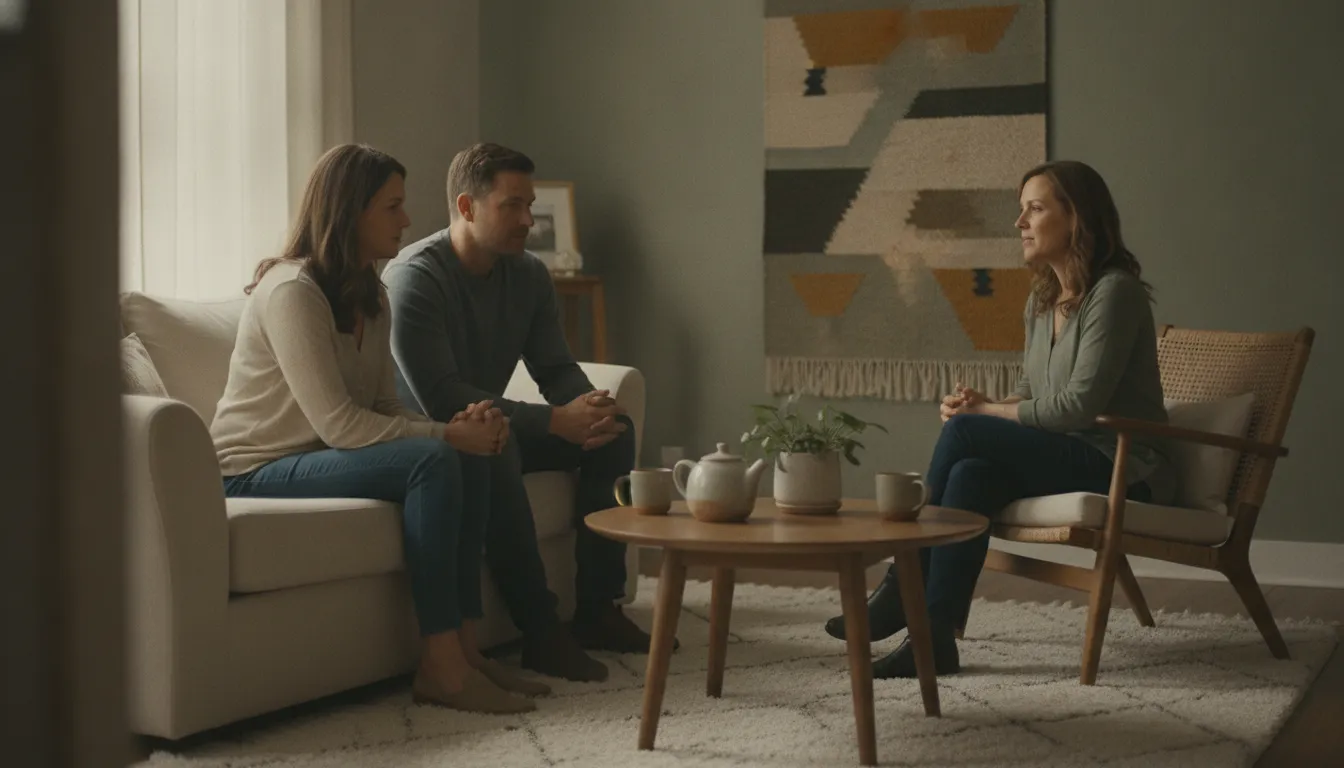
The first appointment is usually an assessment and orientation, not a test that either partner can pass or fail. The therapist may ask how the relationship began, what has changed over time, and what brought you to counseling now. Each person may have an opportunity to describe current concerns and how those concerns affect daily life. This history helps the clinician understand the relationship's patterns rather than reducing the situation to one isolated disagreement. An initial couples therapy session often includes relationship history and both partners' perspectives.
You may talk about recurring arguments, emotional distance, trust concerns, intimacy, parenting, finances, or a major life transition. You do not need to arrive with a perfectly defined goal. Some couples want to improve communication, while others are still clarifying what they need from the process. Early conversations may also identify shared values, expectations, and practical hopes for counseling. A licensed therapist can help translate broad concerns into workable areas of focus without diagnosing either partner or promising a particular outcome.
A couples therapist is not there to determine who is right, assign blame, or act as a judge. The work generally focuses on the relationship and on helping both partners feel heard within a respectful structure. Neutrality does not mean ignoring harmful behavior or treating every situation as identical. It means the therapist works carefully with each person's perspective while keeping the session oriented toward understanding and constructive choices. Mayo Clinic describes couples therapy as relationship-focused rather than an exercise in taking one partner's side: learn more about what couples therapy may involve.
At Renewal of the Mind, a standard counseling session usually runs about 50 to 60 minutes, although the exact structure can vary by clinician and circumstance. The appointment may include introductions, confidentiality and logistics, an overview of concerns, and discussion of possible next steps. You might leave with a preliminary focus for future sessions, a communication practice, or simply a clearer understanding of what the therapist recommends. Between partners, pauses are allowed. It is normal to feel nervous, hesitant, or unsure about speaking openly at first. You can tell the therapist when a topic feels difficult and ask how it will be handled.
Questions in couple counseling are meant to help the therapist understand the relationship from both partners' perspectives. They are not an interrogation, a test, or an effort to decide who is right. A therapist's role is to support both partners rather than act as a judge or referee, keeping attention on the relationship and the changes you hope to make. Mayo Clinic explains that couples therapy often considers both the history of the relationship and each person's experience of current struggles.
You may be invited to describe what brought you to therapy, when concerns began, and what you have already tried. The therapist may ask each partner what conflict feels like from their side, what they need but have difficulty expressing, and what they wish their partner understood. Both accounts can be true, even when they differ. The goal is not to force immediate agreement. It is to slow down the conversation enough to identify the emotions, needs, and meanings beneath repeated arguments.
Rather than focusing only on the latest disagreement, a therapist may look for a recurring cycle. For example, one partner may pursue a conversation while the other withdraws, leaving both feeling unheard. You may discuss how you respond when tension rises, what helps you reconnect, and which situations tend to activate the pattern.
Expect questions about the future as well. Partners often explore shared values, expectations, and long-term goals, including how they want to handle responsibilities, family decisions, finances, or changing priorities. Being candid about needs and expectations can create more room for understanding. Goals might include communicating with less defensiveness, making a decision, rebuilding trust, or learning how to move forward with care when partners are uncertain about the relationship's direction.
A thoughtful therapist will also ask what works. You might identify moments of teamwork, qualities you appreciate, past challenges you have handled, or reasons you still want support. Recognizing existing strengths gives therapy something practical to build on, rather than defining the relationship only by its problems.
Depending on your concerns, questions may also address trust, emotional or physical intimacy, grief, parenting, cultural expectations, or a major transition such as a move or career change. You can ask how a topic will be handled if it feels especially vulnerable. Some approaches may include an individual conversation alongside joint sessions, but the therapist should explain that plan clearly. Honest answers are useful, and you do not have to present a perfect version of your relationship for therapy to begin.
Communication work often starts with slowing down a familiar disagreement so both partners can notice what is happening beneath the words. A therapist may help each person speak without interruption, listen for meaning rather than preparing a rebuttal, and describe concerns with an "I" statement. For example. "I feel alone when plans change without us talking" gives a partner more information than "You never consider me." Active listening and I-statements are commonly used tools in relationship work. But a licensed therapist can help adapt them to the couple's needs. Mayo Clinic describes effective listening and communication as important parts of a healthy relationship.
Validation is another early skill. It does not require agreeing with every interpretation or giving up a concern. Instead, a partner might say, "I can understand why that felt dismissive," before explaining a different perspective. This can reduce defensiveness and create room for empathy. The therapist may also help partners regulate emotion by taking a pause, noticing physical signs of escalation. Breathing, or returning to the conversation when both people are able to participate thoughtfully. These practices are not a demand to suppress strong feelings. They are ways to keep difficult subjects from becoming more hurtful.
Call (571) 264-8192 to discuss couple counseling in Fairfax.
Many couples become caught in a recurring cycle. One person raises a concern, the other feels criticized and withdraws, and the first person pursues the conversation more intensely because they feel unheard. Each response can make sense in the moment while still reinforcing the pattern. In couple counseling, the focus may shift from identifying who started the argument to recognizing how the cycle affects both partners. Understanding conflict patterns can help couples identify interaction cycles that keep disagreements going.
A concrete practice might involve a couple discussing household responsibilities. The therapist could invite one partner to describe the underlying feeling and request: "I feel overwhelmed when I manage the evening routine alone. Could we decide together who handles which tasks?" The other partner might reflect what they heard. Validate the pressure, and share their own limits before the couple works toward a specific plan. The goal is not to script every conversation or guarantee agreement. It is to build a process in which both people can speak honestly, listen with care. And make decisions with more awareness of the cycle they are trying to change.
Over time, communication work may include practicing these skills between sessions and bringing back what felt useful or difficult. Progress can be uneven, especially when conversations involve grief, betrayal, parenting, finances, or other sensitive concerns. A therapist can provide structure and individualized guidance while respecting each partner's perspective.
Preparation does not require having the right words, a complete relationship history, or the same level of readiness as your partner. A first appointment is a place to begin understanding what brings you in and what you hope may be different. These steps can help you arrive with enough context while leaving room for the conversation to unfold naturally.
You do not have to wait for a relationship crisis to consider support. Couple counseling may be a reasonable next step when the same disagreements keep returning. Conversations regularly become tense, or you and your partner feel unsure how to move forward. A licensed therapist can help you look at the patterns beneath a conflict without assigning blame or promising a particular outcome.
Recurring conflict is often less about one isolated argument and more about an interaction cycle. One partner may pursue a conversation while the other withdraws, for example, leaving both people feeling unheard. Counseling can create a structured setting to slow that cycle down, clarify what each person is trying to communicate, and practice responding with less defensiveness. Communication and conflict-management skills can be useful even when these concerns have been present for a long time.
Trust concerns may also be a reason to seek help. A breach of confidence, ongoing uncertainty, or difficulty rebuilding emotional safety can be painful to address alone. Intimacy concerns, including changes in physical or emotional closeness, are another common topic in relationship work. These conversations require care, privacy, and respect for each partner's experience. A therapist can help determine what should be addressed together and whether additional individual support would be appropriate.
Major transitions can place new demands on a partnership. Becoming parents, moving, changing careers, or adjusting to another significant life change may expose differences in expectations and coping styles. Therapy can offer a supportive place to identify shared values, discuss responsibilities, and decide what kind of partnership you want to build during the transition.
Sometimes the question is not simply how to repair the relationship. You may be trying to decide whether to remain together, separate, or establish a healthier way to move forward. Counseling does not make that decision for you, and both partners should have room to speak honestly. The purpose is to support thoughtful, informed conversations rather than guarantee reconciliation.
Fit matters. Look for a clinician whose approach, communication style, cultural awareness, and experience feel appropriate for your relationship and concerns. Both partners' active participation can support the work. But uncertainty or different levels of readiness are worth discussing openly with the therapist rather than treating them as an automatic barrier.
| Option or concern | Useful question to ask |
|---|---|
| In-person sessions | Where does the first appointment take place? |
| Telehealth | Would secure virtual sessions fit our privacy needs? |
| Relationship concerns | How do you approach communication or trust concerns? |
| Different readiness levels | How can each partner participate honestly? |
For couples in Northern Virginia, Renewal of the Mind offers couples counseling in Fairfax, as well as telehealth options in Virginia. A consultation can help you ask questions about fit and decide what support, if any, makes sense for your situation.
Call (571) 264-8192 to explore your next step.
Couple counseling is a form of therapy in which partners meet with a licensed mental health professional to explore relationship concerns. Communication patterns, shared goals, and possible next steps. It can support couples at different stages of a relationship. The purpose is not to assign blame or guarantee reconciliation, but to create a structured setting for honest, respectful conversation.
Sessions may begin with an assessment of the relationship's history and each partner's view of current concerns. The therapist can help identify recurring interaction cycles, practice communication skills, and discuss goals such as improving understanding, addressing conflict, or making a thoughtful decision about the relationship. The approach should be explained clearly and adapted to the couple's circumstances.
Joint participation can support relationship-focused work, but partners may arrive with different levels of readiness. Share that uncertainty with the therapist rather than treating it as a reason to stay silent. Depending on the approach and concerns, a clinician may sometimes include individual conversations alongside joint sessions. Ask how confidentiality and participation will be handled.
The first session may include introductions, confidentiality and logistics, each partner's perspective, relationship history, current concerns, and early goals. It is normal to feel nervous or unsure what to say. At Renewal of the Mind, standard counseling sessions are generally about 50 to 60 minutes, although the exact structure can vary.
There is no single timeline that fits every couple. The length and frequency of counseling can depend on the concerns being addressed, the goals you set with your therapist, your availability, and how the process develops. Ask the clinician how progress will be discussed and what options may be appropriate for your situation. A consultation can help you understand the next step without committing to a predetermined outcome.
Starting couple counseling does not require having every answer or knowing exactly where the relationship will lead. It can begin with a conversation about what you are experiencing, what you hope to understand, and whether the therapist's approach feels like an appropriate fit.
Renewal of the Mind offers compassionate mental health counseling for couples in Fairfax and the broader Northern Virginia area. Ask about the first appointment, in-person care, or available telehealth options, and share only what you feel ready to discuss.
Call (571) 264-8192 to discuss couple counseling.
You can also contact Renewal of the Mind to begin a private conversation about next steps. A licensed clinician can help you decide what support may fit your circumstances.
Our compassionate team at Renewal of the Mind is here to help — whether you’re navigating anxiety, trauma, relationship challenges, or simply need someone to talk to. We offer in-person and telehealth sessions across Northern Virginia.